1Japanese Gardens
The sheltered coral bay on the east side of the sandbar. Shallow, calm and full of hard and soft coral, it is a favourite for first dives, training and snorkelling. More about Japanese Gardens
Koh Tao / Beaches & islands / Koh Nang Yuan
Three islands, one sandbar, a famous viewpoint and some of the best snorkelling and diving in the Gulf of Thailand.
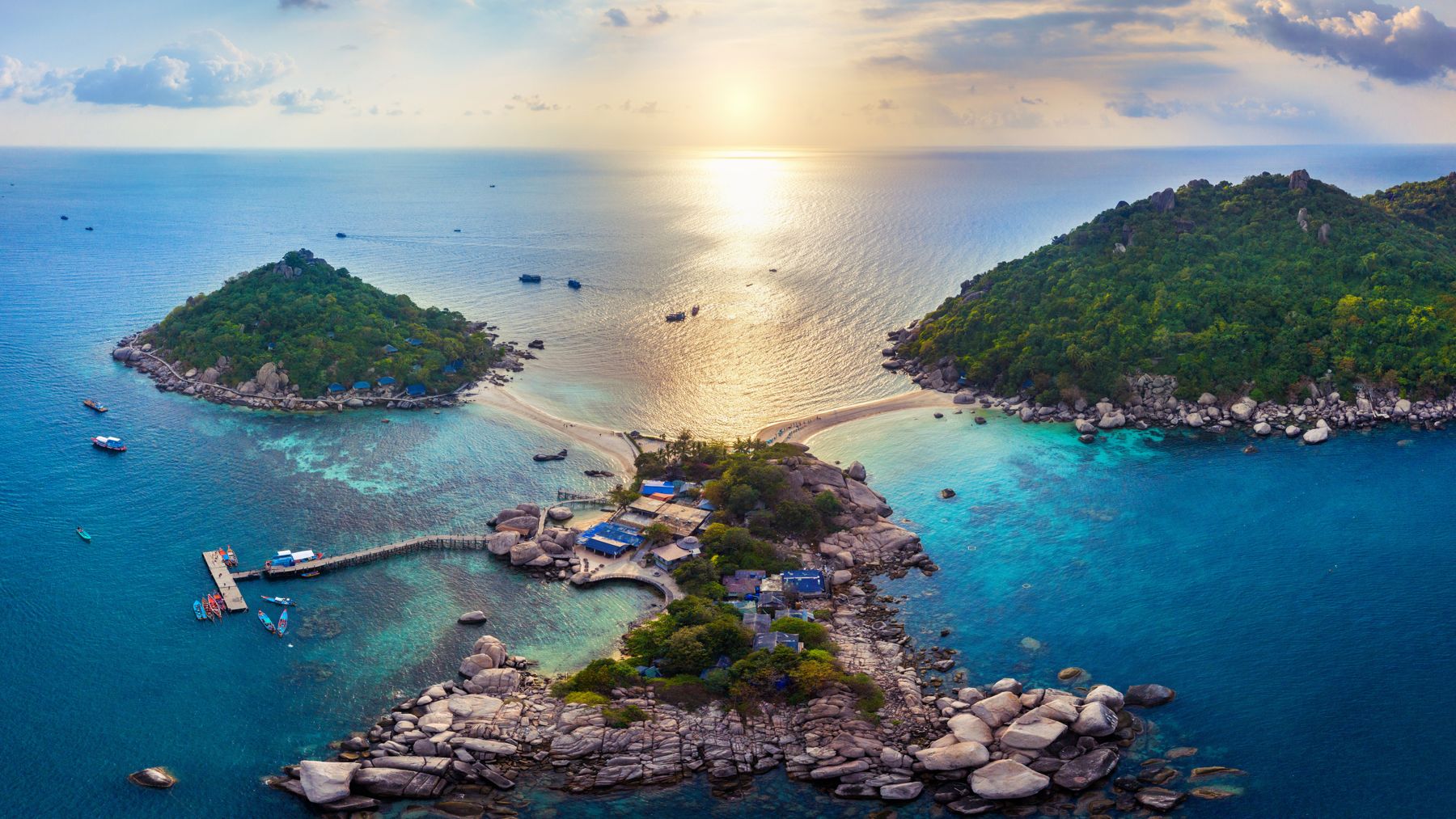
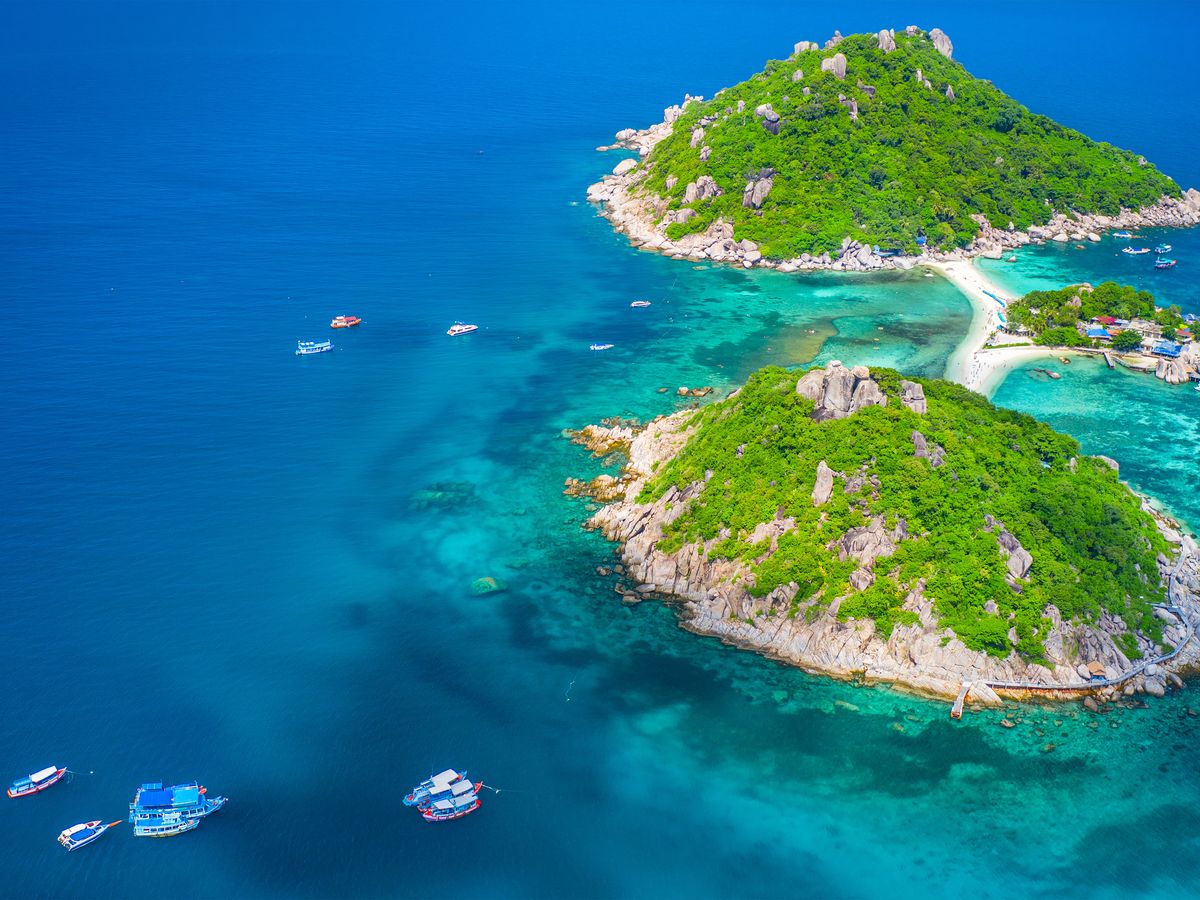
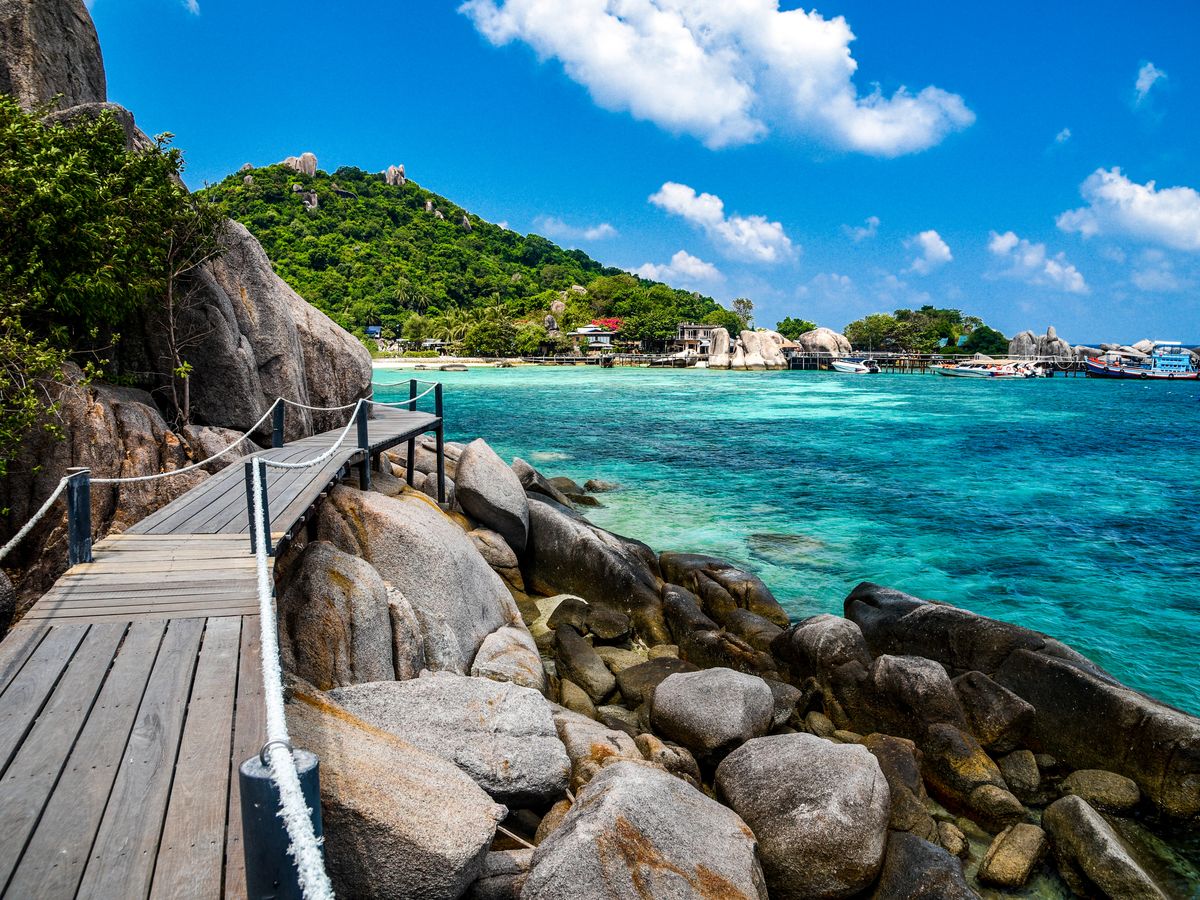
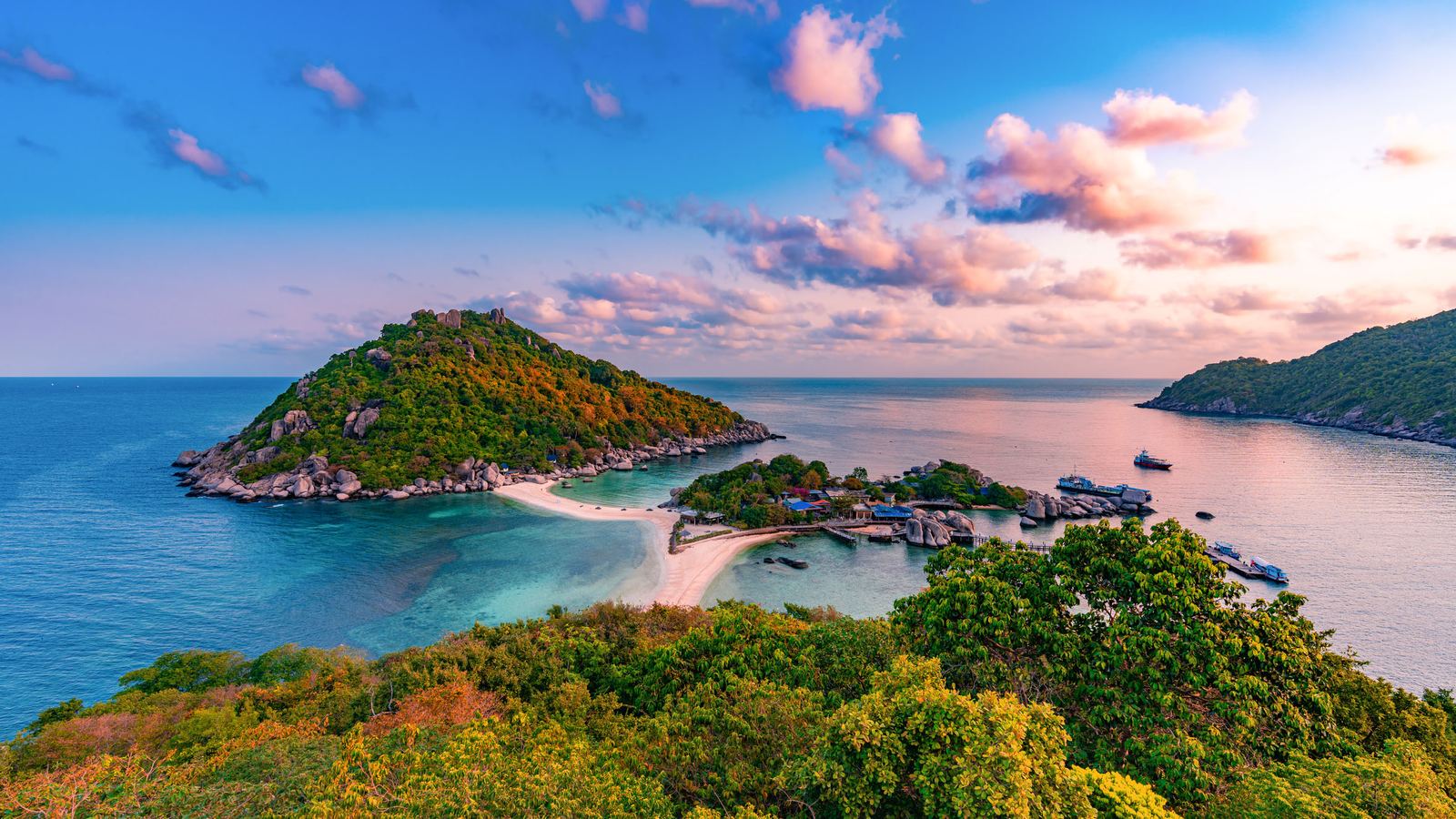
Koh Nang Yuan is the picture most people have in mind when they think of Koh Tao: three small, green, granite islands joined by a curving ribbon of white sand, with turquoise water on both sides. It sits about half a kilometre off Koh Tao's northwest tip, and it is one of the most photographed views in Thailand.
This page explains everything about the island: its story and its name, the sandbar, the viewpoint, the snorkelling, the dive sites all around it, the rules, the best time to go and the ways people get there.
Koh Nang Yuan lies just off the northern end of Sairee Beach. The sandbar runs between the islets, with a sheltered coral bay on its east side and open water on its west side. The dive sites below are spread all around it.
In Thai the island is written เกาะนางยวน. Koh means island and nang means lady. Yuan is an old Thai word for the Vietnamese, so the name is often translated as "the island of the Vietnamese lady". One local story says it was named after a Vietnamese woman who was washed ashore here by a storm long ago. It is a legend rather than recorded history, but it is the story you will hear on Koh Tao.
Koh Nang Yuan is privately owned and run by its only resort, Nangyuan Island Dive Resort. Its bungalows climb the hillsides of the islets, and it has a dive shop, a restaurant and a café. Because the island is private, day visitors pay a landing fee at the pier, and the resort sets the rules for everyone who comes ashore.
The island has also become known for looking after its reef. It has kept a strict ban on single-use plastic for years: bags are checked at the pier, and drinks on the island are served in glass bottles. Thai and international media have reported on the policy as an example for other islands.
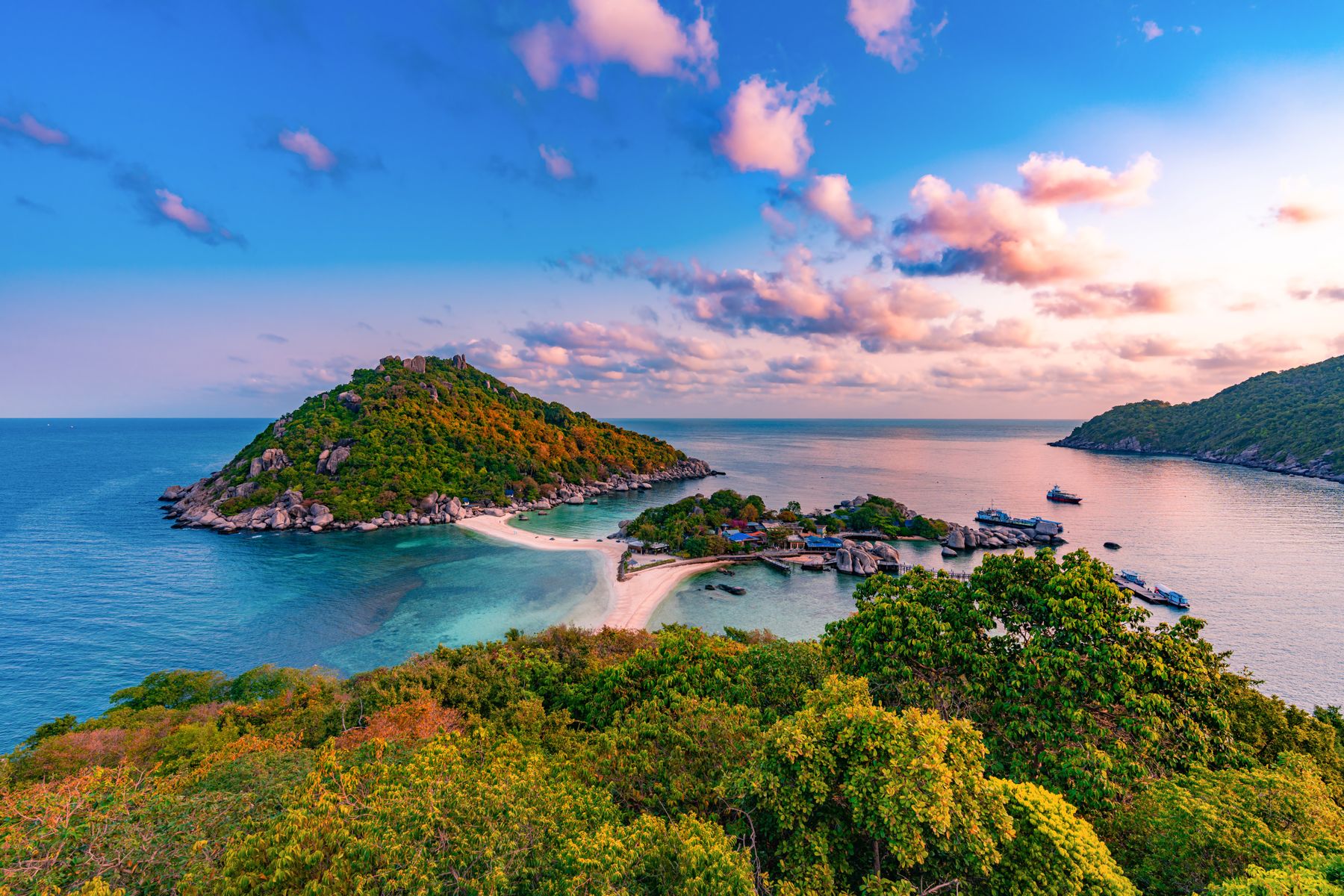
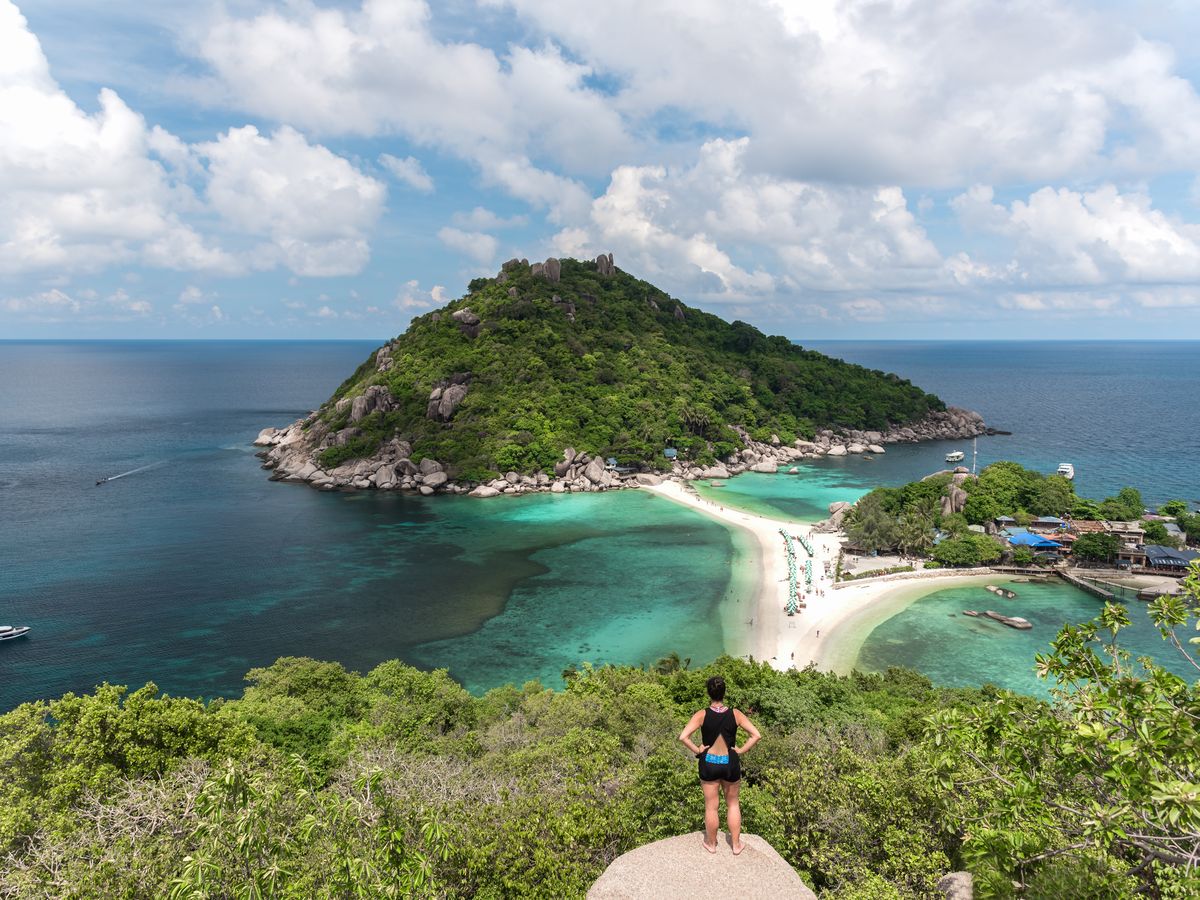
The white strip that joins the three islets is a natural sand causeway. Geographers call this kind of formation a tombolo: waves and currents bend around the islands and drop sand where they meet, until a bar links them. Koh Nang Yuan's is unusual because it joins three islands rather than two.
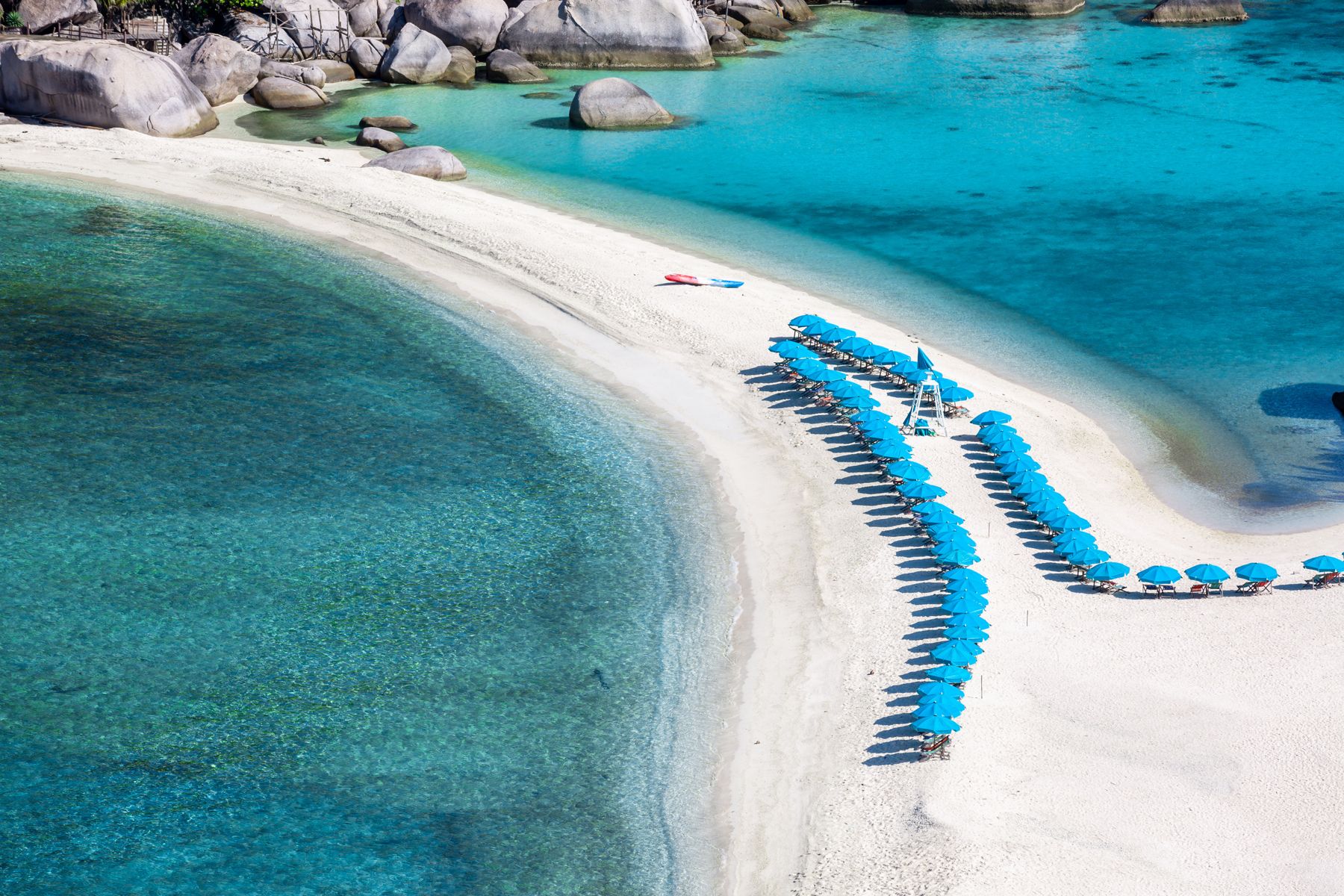
The sandbar changes with the tide and the season. At high tide parts of it can be covered, and it looks its best at low tide. The east side is sheltered and shallow, which is where the coral garden is. The west side faces the open sea.
The famous photograph is taken from the viewpoint on top of the southern islet. The path is short but steep: concrete steps first, then a scramble over large boulders at the top. Most people take 15 to 20 minutes to get up, longer in the midday heat or when there is a queue for the summit rock.
You don't need a boat to snorkel here: the reef starts a few metres from the beach. The best-known spot is Japanese Gardens, the sheltered bay on the east side of the sandbar. Its name comes from its neat-looking gardens of hard and soft coral. In calm conditions the water is clear and shallow, and you will see parrotfish, butterflyfish, angelfish and sometimes blacktip reef sharks in the shallows.
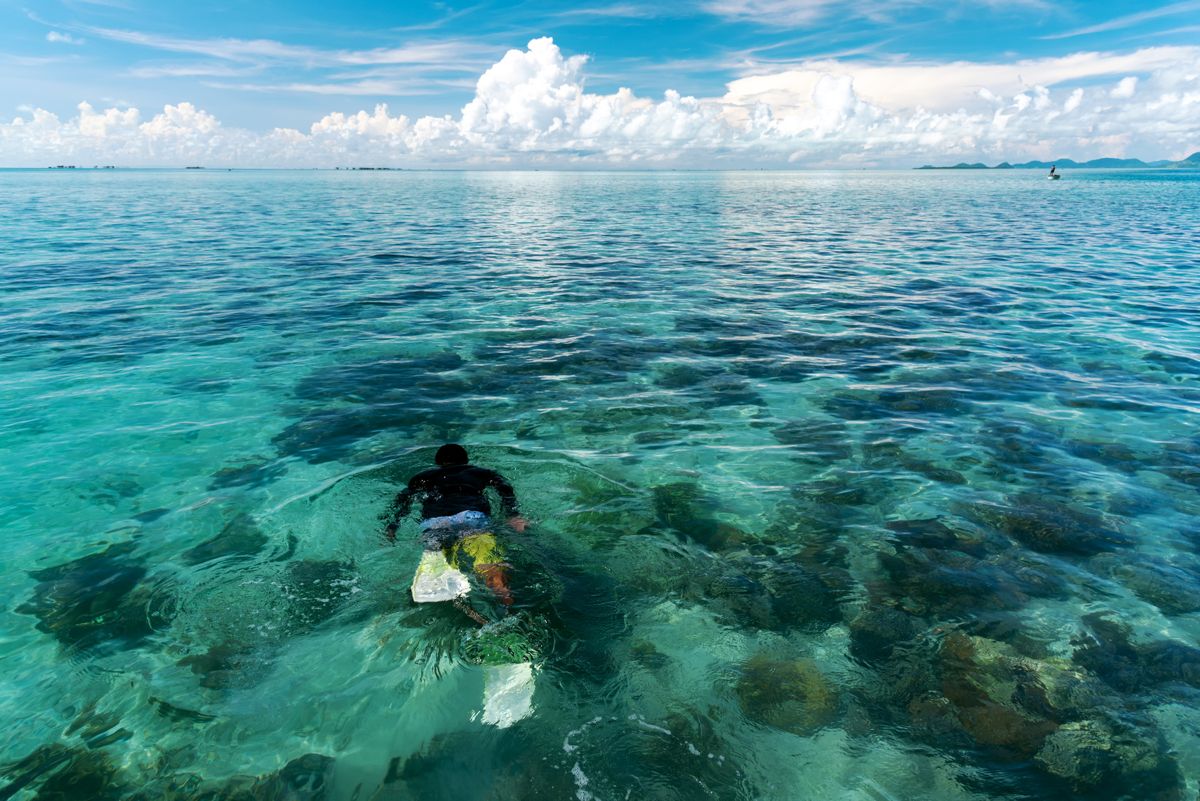
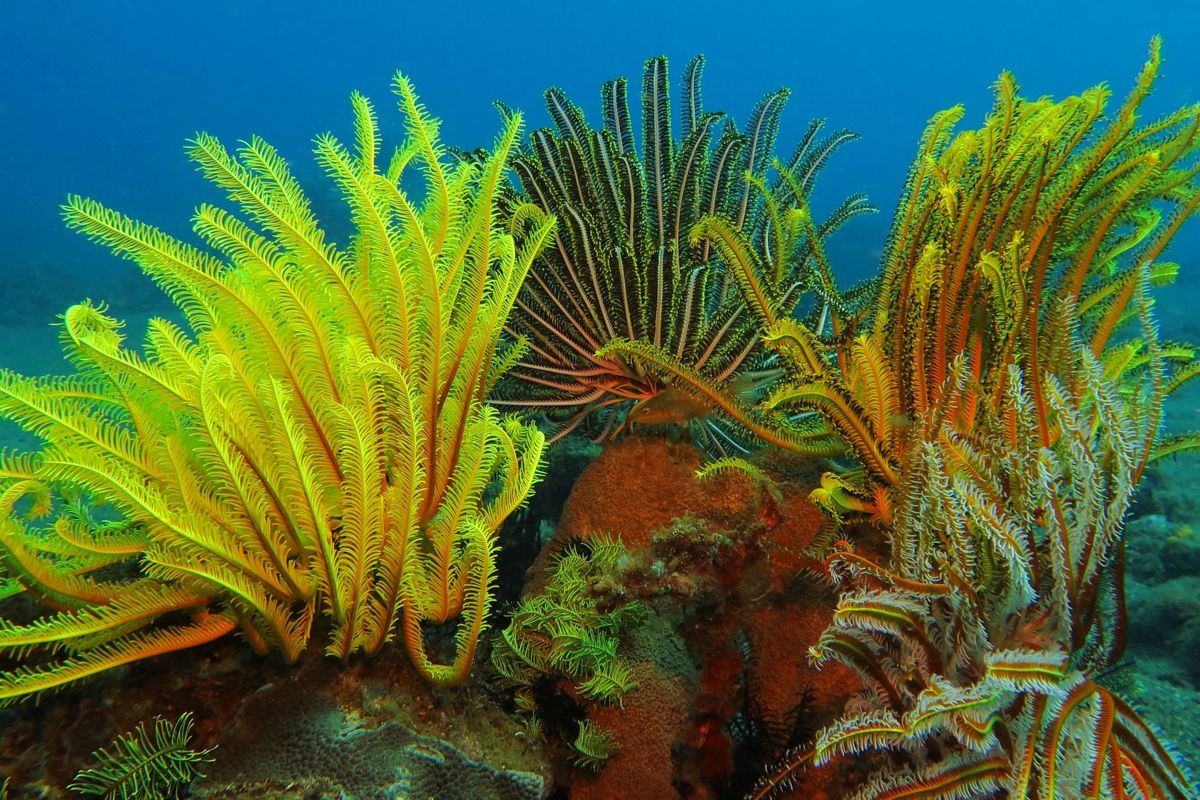
For more spots around the main island, see our guide to snorkelling on Koh Tao.
Koh Tao is one of the busiest places in the world to learn to dive, and many of its training and fun dives happen around Koh Nang Yuan. The sites below are visited by the dive schools on Koh Tao, each with its own schedule. Depths are approximate and vary with the tide.
The sheltered coral bay on the east side of the sandbar. Shallow, calm and full of hard and soft coral, it is a favourite for first dives, training and snorkelling. More about Japanese Gardens
Two rock pinnacles surrounded by white sand channels on the west side, opposite Japanese Gardens across the sandbar. Easy to navigate and rich in reef life, so many courses use it. More about Twins
Also called Nang Yuan Pinnacle: a rock that rises almost to the surface off the east coast. Divers often swim from it to Nang Yuan Cave, technically a cavern and one of the best-known swim-throughs on Koh Tao, then finish in Japanese Gardens.
Granite boulders, caves and swim-throughs off the north side of the island. The topography makes it one of the most dramatic sites in the area, and it is also known as a night-dive site.
A deeper site to the west of Twins, with lots of marine life and the chance of larger visitors passing by.
Two big boulders and coral gardens on the stretch of water between Nang Yuan and Koh Tao. Popular by day and for night dives.
A former Royal Thai Navy ship sunk off Sairee in 2011 as an artificial reef, now covered in life. More about HTMS Sattakut
About 11 km to the northwest, this is the area's most famous deep site, with big schools of fish and whale sharks in some seasons. More about Chumphon Pinnacle
Want to dive here? Courses, fun dives and try dives are run by the dive schools on Koh Tao. See where to learn to dive on Koh Tao and the full Koh Tao dive site guide.
There is no bridge and no road: you go by boat. These are the usual ways, all run by independent operators.
From Sairee: about 15 min
From Mae Haad: about 30 min
Agree the fare and your pick-up time before you go
Round-the-island tours and dive boats stop here
Less time ashore; ask if the landing fee is included
Some ferries from Koh Phangan and Koh Samui stop here, and day tours combine it with Koh Tao
Check the operator's schedule
The shortest crossing is from the northern end of Sairee Beach. Longtail captains wait on the beach and at Mae Haad pier, and hotels, tour desks and dive schools can arrange a boat too. For other ways of getting around, see ferries and getting around Koh Tao.
Day visitors are welcome during set daytime hours, roughly from mid-morning to late afternoon, and the times have changed over the years. Confirm them with your boat, and agree your pick-up time before you step off.
How busy it gets
These rules are set by the island to protect the reef and the beach, and staff enforce them on arrival.
Koh Nang Yuan can be visited all year. The sea is usually calmest and clearest from February to April. The northeast monsoon, roughly from October to December and strongest in November, brings the most rain and the roughest seas, and boats sometimes don't go. From June to September the weather is often good, though wind from the west can make the crossing choppier on some days.
No. It is a separate group of three small islets about half a kilometre off Koh Tao's northwest tip, in Surat Thani province. It is privately owned and run by its resort.
Yes. Day visitors pay a landing fee per person at the pier, in cash. The amount has changed over the years, so check it with your boat before you go. Some tours include it.
Yes, in a glass or metal bottle. Plastic bottles and cans are not allowed and are taken away at the pier. Drinks are also sold on the island.
Usually 15 to 20 minutes up a steep path with steps and boulders. Wear shoes with grip and go early to avoid the queue at the top.
Yes. The reef starts just off the sandbar, especially in Japanese Gardens on the east side. Fins aren't allowed in the shallow areas, so a mask and snorkel are enough.
Many dive schools on Koh Tao run try dives and beginner courses at the sites around the island, such as Japanese Gardens and Twins. Ask the dive schools directly about what they offer.
No. This is an information guide only. Boats, tours and dives are run by independent companies on Koh Tao, so contact them directly.
Information checked in November 2026. Fees, hours and rules are set by the island and can change. Photos: Adobe Stock and Koh Tao Thailand.