Koh Tao dive sites / Southwest Pinnacle
Southwest Pinnacle: Dive Site, Koh Tao's Underwater Mountain Range
A cluster of granite peaks offshore, loved for giant groupers and big schools.
Koh Tao dive sites / Southwest Pinnacle
A cluster of granite peaks offshore, loved for giant groupers and big schools.
Southwest Pinnacle is a group of submerged granite peaks in open water south-west of Koh Tao. Divers often call it an underwater mountain range: the rocks climb from sand at around 30 m to a summit just 5 to 6 m below the surface, and they are classically counted as seven.
For a Southwest Pinnacle dive on Koh Tao, plan on a boat ride of about 40 to 45 minutes (an hour on a slow day). It is rated Advanced, it is a big-fish site, and it is one of the best multi-level dives around the island.
The staggered heights of the rocks make the profile easy to plan. Start deep around the bases at 22 to 28 m, work up the ridges, and finish on the shallowest summit at about 5 to 6 m for your safety stop. It is a natural way to use your air and no-stop time well.
Because the rocks stand at different heights, the dive feels like a walk through a mountain range rather than a lap around one rock. You move through corridors between the pinnacles, with the big groupers sitting on the western side and the schooling fish moving above you in the blue. Take your time on the way up. The shallow pinnacle is a lovely place to hang for the last few minutes, with anemones, pink anemonefish and yellow boxfish around you.
It is a deep-adventure and Deep Diver favourite, and many guides also use it for nitrox and sidemount dives because the staggered profile gives you so many levels to work with.
The formation is a multi-peaked granite ridge system, with staggered pinnacles that form natural corridors. The main summit reaches to about 5 to 6 m. The pinnacle bases sit at roughly 22 to 28 m, and the sand beyond is at about 30 m. Guides do not all agree on the exact number or position of the peaks, so expect your briefing to differ a little from this page.
Sea whips, black coral and barrel sponges colonise the deeper bases, and the layered rock and crevices hold shrimp and rays. The deeper western side is where giant groupers like to sit.
Some guides also look for a smaller secret pinnacle out in the blue, a 5 to 10 minute swim from the main formation. It needs good visibility and a guide who knows the bearing.
Giant groupers are the stars. They patrol the rock and tolerate divers, and batfish like to tag along. Overhead, fusiliers stream past while trevally and barracuda hunt through them.
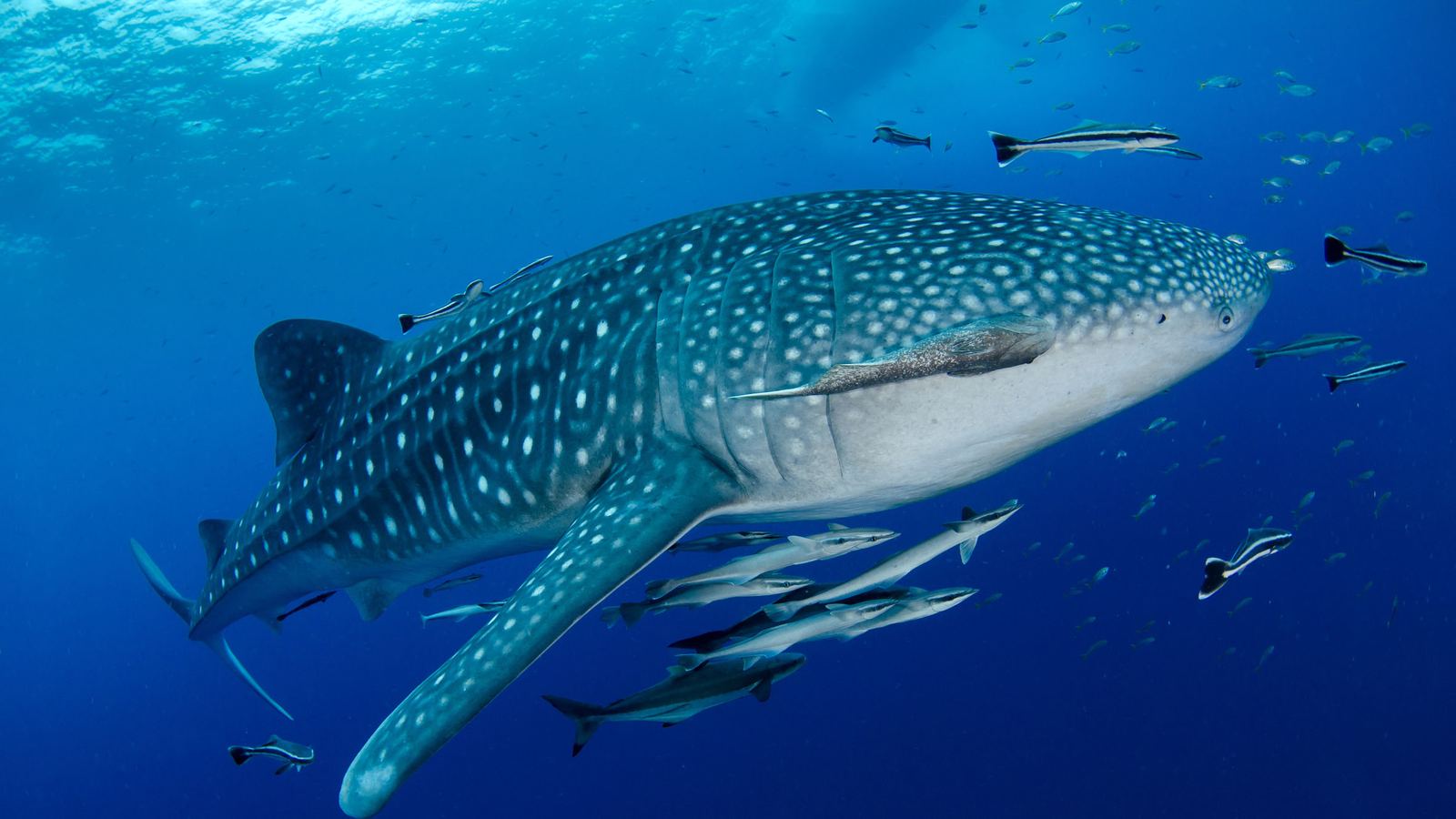
Whale sharks drift through in season, though never on demand.
Look in the cracks as well as out in the blue. Shrimp hide in the layered rock, and rays rest under the ledges. Torch in hand, a slow pass along a ridge often turns up more than a fast lap of the whole site.
Current ranges from slight to moderate at certain times of the month, and it can build to strong. Visibility is typically 15 to 30 m in good conditions, but can drop well below that on a bad day. The site is dived through much of the year, with March to October often mentioned as the best stretch and April to September the peak. Rough weather can cancel offshore trips.
Depth goes to about 30 m, and currents can build quickly. Titan triggerfish are territorial when nesting, and the anemone tentacles on the shallow pinnacle can sting. Poor visibility makes navigating to the secret pinnacle risky. Open Water divers are usually kept to the shallow summit, and most operators rate the site Advanced.
Brief your buddy on the plan before you get in: where the shallow summit is, what your turn pressure is, and what to do if the current picks up. On a site with this much going on, it is easy to lose track of depth and gas.
The shallowest top is about 5 to 6 m, the pinnacle bases are around 22 to 28 m and the sand is at about 30 m.
About 40 to 45 minutes by dive boat. Exact distance in km varies depending on where you measure from.
It is rated Advanced, and Open Water divers are usually kept to the shallow summit in good conditions.
A smaller rock a 5 to 10 minute swim from the main formation, reachable only in good visibility with a guide who knows where it is.
Sometimes, in season. They drift through but are never guaranteed.
A quiet, shallow muck-diving site off the south-west coast for macro fans.
9 to 30 mA rarely visited offshore pinnacle with huge schools and relaxed groupers.
5 to 14 mA lesser-known, beginner-friendly reef named after a rock that looks like a seated Buddha.
0 to 15 mA sandy bay at the south end of the east coast where you can snorkel with green turtles and blacktip reef sharks from the beach.
Learn to dive
Koh Tao is one of the best places in the world to learn to dive: warm, calm water, sites a short boat ride away and schools for every style. Here are the courses most schools offer and the dive schools we know and trust. Schedules, course length and prices are set by each school.
PADI 5-Star · Sairee
PADI 5-Star IDC on Sairee Beach: small groups, every level, taught in seven languages.
Full guide →
Private club · South coast
Very small classes, a training pool and boats straight from the resort pier.
Full guide →
Dive school · Mae Haad
Groups of four, two minutes from the pier, from Open Water to instructor.
Full guide →
French dive school · Mae Haad & Chalok
Courses in French since 2012: SSI and CMAS / FFESSM, groups of four, first dive to instructor.
Full guide →
Freediving & yoga · Mae Haad
Learn to freedive on one breath, with breathwork and yoga in a sea-view shala.
Full guide →
PADI 5-Star CDC · Mae Haad
One of the island's most established dive centres, with a focus on pro training.
Full guide →
Freediving · Sairee
Personal freediving courses with experienced instructors off Sairee Beach.
Full guide →
SSI dive resort · Chalok
Dive and stay in the quiet southern bay of Chalok.
Full guide →
PADI dive resort · Chalok
Courses and fun dives with a resort to stay at, in Chalok.
Full guide →Also on the island: DPM Diving and dozens more. See every dive centre on Koh Tao →