Koh Tao dive sites / Hin Pee Wee
Hin Pee Wee Koh Tao's Pinnacle Beside the Sattakut Wreck
A compact cluster of coral-covered pinnacles that rewards a slow dive, and a perfect way to shallow up after the wreck.
Koh Tao dive sites / Hin Pee Wee
A compact cluster of coral-covered pinnacles that rewards a slow dive, and a perfect way to shallow up after the wreck.
Hin Pee Wee is a small cluster of granite pinnacles about 2 km off the north-west coast of Koh Tao, roughly 200 m south of White Rock. The HTMS Sattakut wreck lies just south of it, anywhere from a few metres to about 40 m away depending on who you ask. Hin Pee Wee Koh Tao divers also know it as Pee Wee Rock or Hin Peewee.
Most people meet it as the second half of a wreck dive: deep on the Sattakut first, then a gentle swim north to finish on the rocks. That is a fine plan, but the site deserves more than a pass-through. It is quiet compared with its neighbours, and the macro life is the real draw.
Start on the deeper northern rocks and work south and up around the main pinnacle, ending on the shallow top. If you arrive from the Sattakut wreck, you do it the other way around: swim north over the sand and shallow up on the rocks.
Dive it on its own and give it a full dive. The small stuff takes time to find.
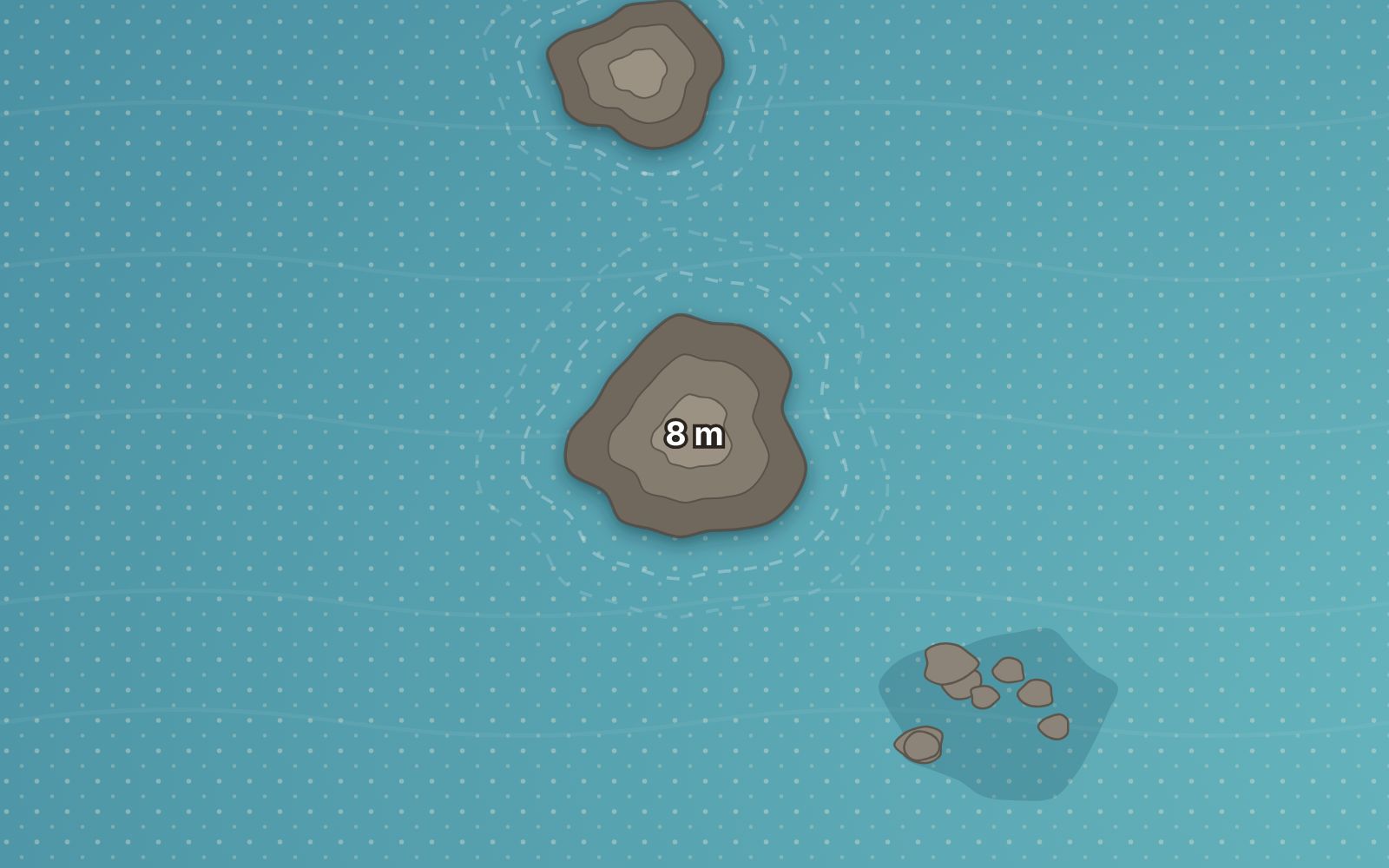
One large pinnacle sits in the middle and rises to about 8 or 9 m. A smaller group of pinnacles lies to the north, and more small rock formations are scattered to the south-east. All of it stands on a sandy bottom.
Circling the base of the rocks takes you to about 16 to 22 m, with the north side deeper than the south. The south-eastern edge drops to around 28 m, and the sand keeps going south toward the wreck. The rocks are draped in table corals, whip corals, sea fans and anemones, with crevices and overhangs between them and a few ledges where turtles rest.
Because the rocks are so compact, you can swim around the whole site in a single dive and still have time to stop and look. The big pinnacle makes a clear landmark, so it is easy to keep your bearings even when the water is murky.
Whale sharks have been seen here occasionally, though you should not count on it.
Bring a patient eye. Much of the life here is small and tucked into the coral, so the divers who hover and look closely see far more than the ones who cruise past. Check the crevices between the rocks and the base of the pinnacles, where hermit crabs, pipefish and scorpionfish like to sit.
Current is usually limited to moderate, but it can pick up around the pinnacles. Visibility ranges from a few metres to about 20 m, and a thermocline often starts around 18 m. Calmer months, roughly March to September, tend to give the clearest water on this side of the island.
The site is often paired with White Rock to the north as well, so ask your dive guide if a longer, three-site profile is planned for the day.
The south-east edge drops to about 28 m, so keep an eye on your depth if you wander. Current around the rocks can be variable, and visibility is sometimes poor. It is listed as an Advanced site, mostly because it is dived alongside the deep wreck.
Because many dives here follow a deep wreck dive, plan your gas and no-decompression time before you leave the Sattakut, not after. The ascent over the pinnacle is the whole point of the combination, so make it slow.
The top of the main pinnacle is about 8 to 9 m. The base of the rocks is around 16 to 22 m, dropping to about 28 m on the south-east edge.
Off the north-west coast, about 200 m south of White Rock and right next to the HTMS Sattakut wreck.
Yes. They are very close, and dive centres usually do the wreck first and then shallow up on Hin Pee Wee.
Great barracuda, turtles, sea snakes and rays, plus macro life such as ornate ghost pipefish and nudibranchs.
A 49 m former landing craft, sunk on purpose in 2011, with two big guns and a hull you can look right into.
1 to 22 mOne of Koh Tao's biggest sites, with two granite pinnacles, a coral garden between them and a famous night dive.
10 to 16 mFour swim-through steel domes in about 13 m of water, built by volunteers to help coral grow.
16 to 28 mA 45 m Royal Thai Navy fast attack craft, sunk in 2023 and already collecting fish and coral.
Learn to dive
Koh Tao is one of the best places in the world to learn to dive: warm, calm water, sites a short boat ride away and schools for every style. Here are the courses most schools offer and the dive schools we know and trust. Schedules, course length and prices are set by each school.
PADI 5-Star · Sairee
PADI 5-Star IDC on Sairee Beach: small groups, every level, taught in seven languages.
Full guide →
Private club · South coast
Very small classes, a training pool and boats straight from the resort pier.
Full guide →
Dive school · Mae Haad
Groups of four, two minutes from the pier, from Open Water to instructor.
Full guide →
French dive school · Mae Haad & Chalok
Courses in French since 2012: SSI and CMAS / FFESSM, groups of four, first dive to instructor.
Full guide →
Freediving & yoga · Mae Haad
Learn to freedive on one breath, with breathwork and yoga in a sea-view shala.
Full guide →
PADI 5-Star CDC · Mae Haad
One of the island's most established dive centres, with a focus on pro training.
Full guide →
Freediving · Sairee
Personal freediving courses with experienced instructors off Sairee Beach.
Full guide →
SSI dive resort · Chalok
Dive and stay in the quiet southern bay of Chalok.
Full guide →
PADI dive resort · Chalok
Courses and fun dives with a resort to stay at, in Chalok.
Full guide →Also on the island: DPM Diving and dozens more. See every dive centre on Koh Tao →