Koh Tao dive sites / White Rock
White Rock: Hin Khao: Koh Tao's Classic Night Dive Site
One of Koh Tao's biggest sites, with two granite pinnacles, a coral garden between them and a famous night dive.
Koh Tao dive sites / White Rock
One of Koh Tao's biggest sites, with two granite pinnacles, a coral garden between them and a famous night dive.
White Rock, known in Thai as Hin Khao (also written Hin Kao), is one of the largest and most popular dive sites around Koh Tao. It sits about 2 km off the island's west coast, around 15 to 20 minutes by boat from Mae Haad and Sairee, and the name comes from the pale-looking northern pinnacle. If you want a White Rock dive on Koh Tao that works for almost every level, this is a safe bet.
The site is a sprawling reef with two big granite formations running south to north and a shallow coral garden between them. By day you get turtles, rays, morays and barracuda. After dark it turns into Koh Tao's classic night dive. It is big enough that you will want more than one dive to see it properly.
The usual plan is to drop down the buoy line at the southern end, explore the deeper southern pinnacle first, and then cross the coral garden and the sandy patch at about 9 m. You finish on the shallow northern pinnacle, where the rock tops come up almost to the surface and give you an easy safety stop.
Going from deep to shallow keeps the dive comfortable and gives you time at each stage. On a second dive you can reverse the order or spend your whole dive on one formation.
On a night dive the route is similar, but the deep-to-shallow order matters even more. Stay close to the rocks, where the hunting happens, and let your guide set the pace so you do not disturb the barracuda or startle the sleeping fish.
The seabed around the rocks is sand and shale. The maximum depth is about 22 m, though some people quote a little more depending on where they measure.
The two formations are big enough that no two dives feel the same. The northern pinnacle is bright and busy with coral, while the southern one is darker and more rugged, with deeper cracks and ledges that repay a torch even in daytime.
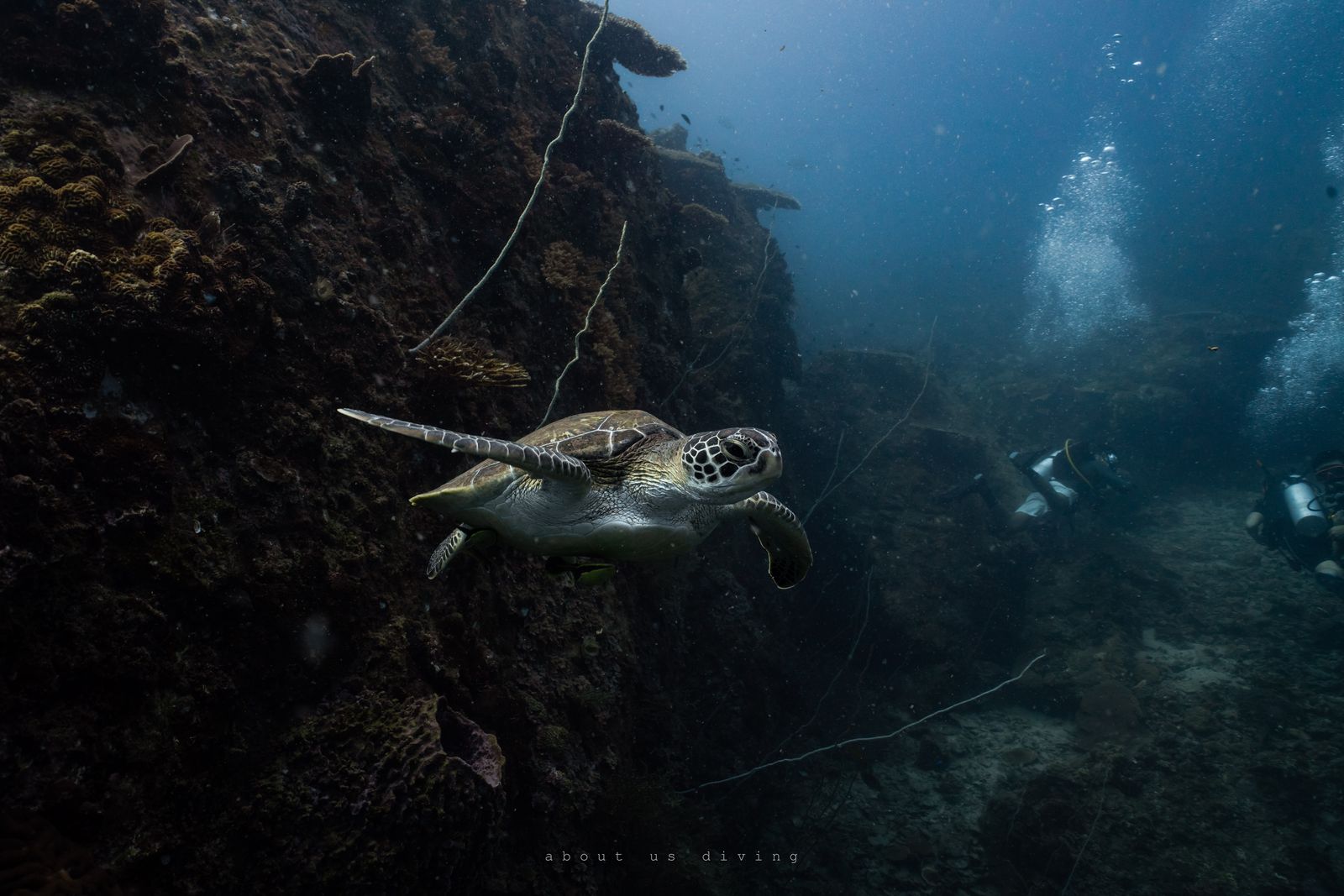
By day you can see boulders and table corals, fan corals, Christmas tree worms, white-eyed moray eels and blue-spotted ribbontail rays under the ledges. Green turtles are regular, titan triggerfish patrol their patches, and yellowtail barracuda school near the southern buoy line. Angelfish, butterflyfish and bannerfish fill the reef, and whale sharks have occasionally been reported.
After dark the site changes. Great barracuda hunt in the beam of your torch, cuttlefish and squid appear, parrotfish sleep wedged in the coral, and turtles rest in crevices. Look for Durban dancing shrimp, cleaner shrimp, nudibranchs and juvenile reef fish on the macro side, and the odd octopus or banded sea krait.
The coral garden between the two pinnacles is worth a pause. Table corals and fans shelter small fish and shrimp, and it is a good place to look for rays resting in the sandy patch before you head up to the shallows.
White Rock is mild to flat most of the year. Visibility is typically about 10 to 20 m and can reach 30 m on a very good day. The only real weather problem is the June to August monsoon, which brings wind and waves to this exposed west side. Most other months are a good time to go.
Titan triggerfish can be aggressive in breeding season, so stay out of their patch and do not swim directly over a nest. On night dives, navigation in dark water takes concentration: stay close to your guide, check your torch and keep an eye on your depth and gas. White Rock is considered a boat dive, with the northern top under 2 m, but it is not a snorkelling site.
From under 2 m on the northern pinnacle down to about 22 m in the south. Some people quote a little deeper.
The Thai name is Hin Khao (Hin Kao), meaning white rock, and it refers to the pale-looking northern pinnacle.
Yes. It is considered Koh Tao's classic night dive, with great barracuda, cuttlefish and sleeping parrotfish.
It is mostly run as a boat dive. The northern top is less than 2 m below the surface, but it is not a typical snorkelling trip.
About 2 km off the west coast, roughly 15 to 20 minutes by boat from Mae Haad or Sairee.
A compact cluster of coral-covered pinnacles that rewards a slow dive, and a perfect way to shallow up after the wreck.
18 to 32 mA 49 m former landing craft, sunk on purpose in 2011, with two big guns and a hull you can look right into.
16 to 28 mA 45 m Royal Thai Navy fast attack craft, sunk in 2023 and already collecting fish and coral.
14 to 30 mA granite pinnacle west of Twins where the crack, the big fish and a brand-new wreck all share one dive.
Learn to dive
Koh Tao is one of the best places in the world to learn to dive: warm, calm water, sites a short boat ride away and schools for every style. Here are the courses most schools offer and the dive schools we know and trust. Schedules, course length and prices are set by each school.
PADI 5-Star · Sairee
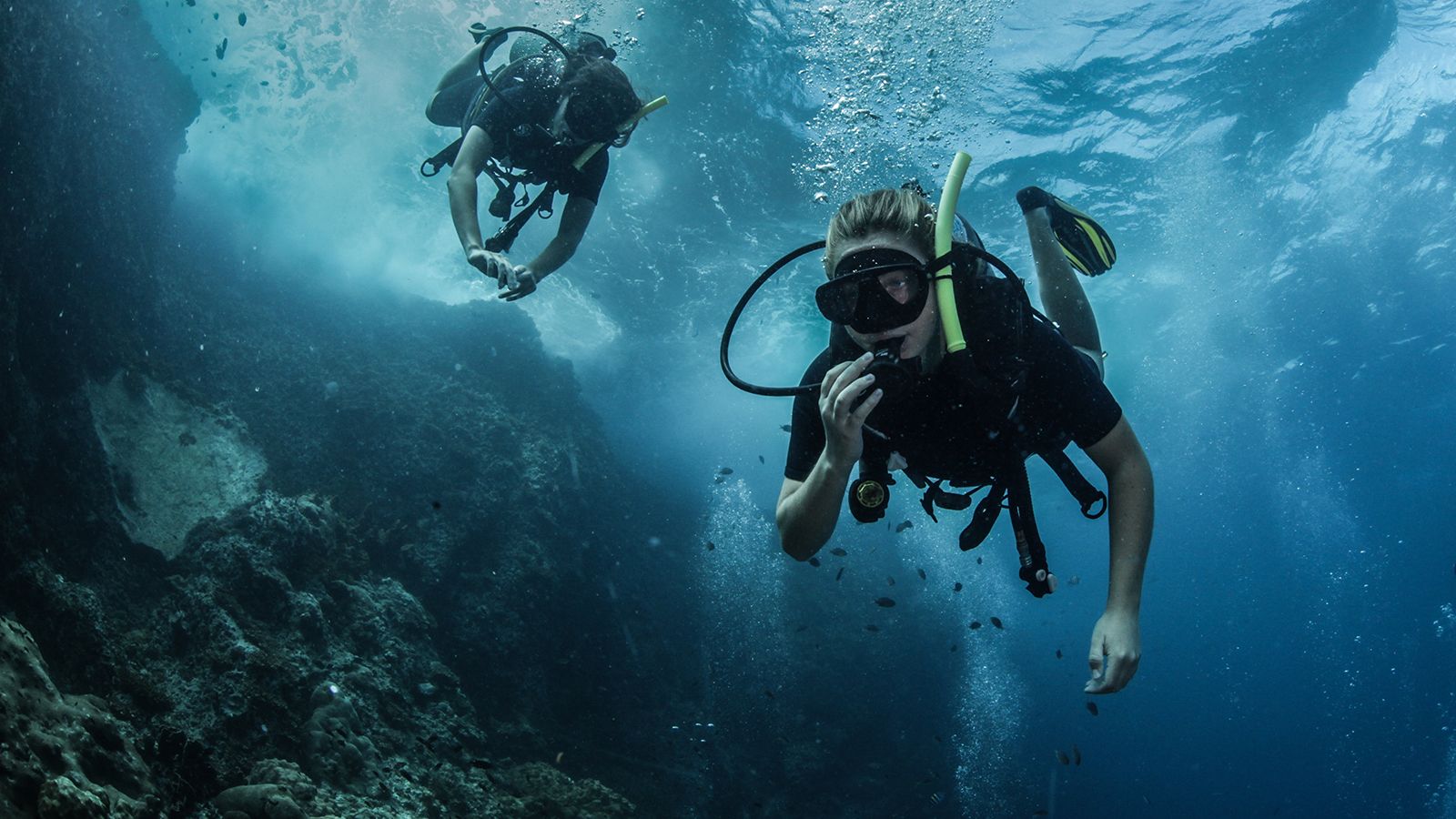
PADI 5-Star IDC on Sairee Beach: small groups, every level, taught in seven languages.
Full guide →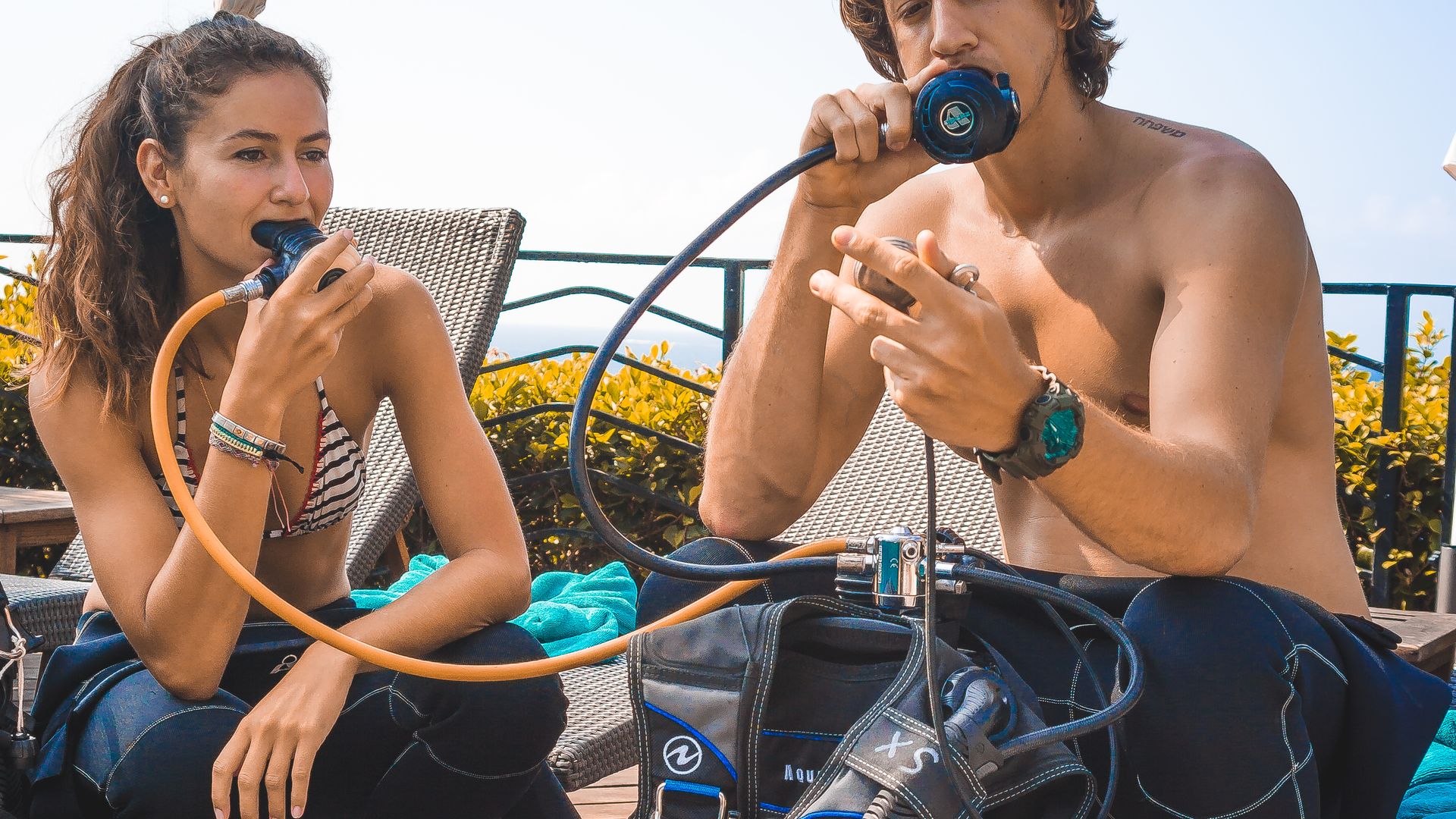
Private club · South coast
Very small classes, a training pool and boats straight from the resort pier.
Full guide →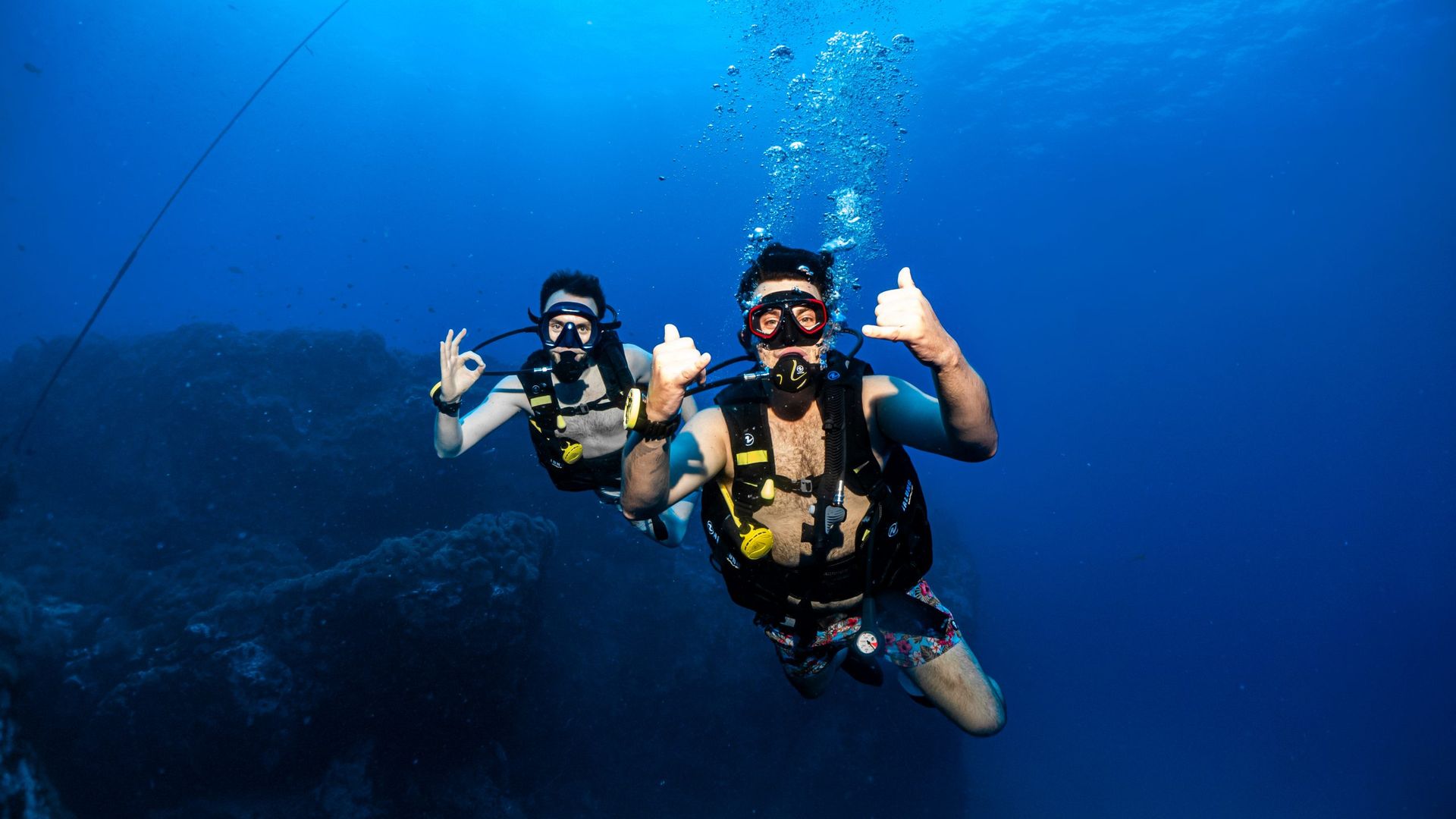
Dive school · Mae Haad
Groups of four, two minutes from the pier, from Open Water to instructor.
Full guide →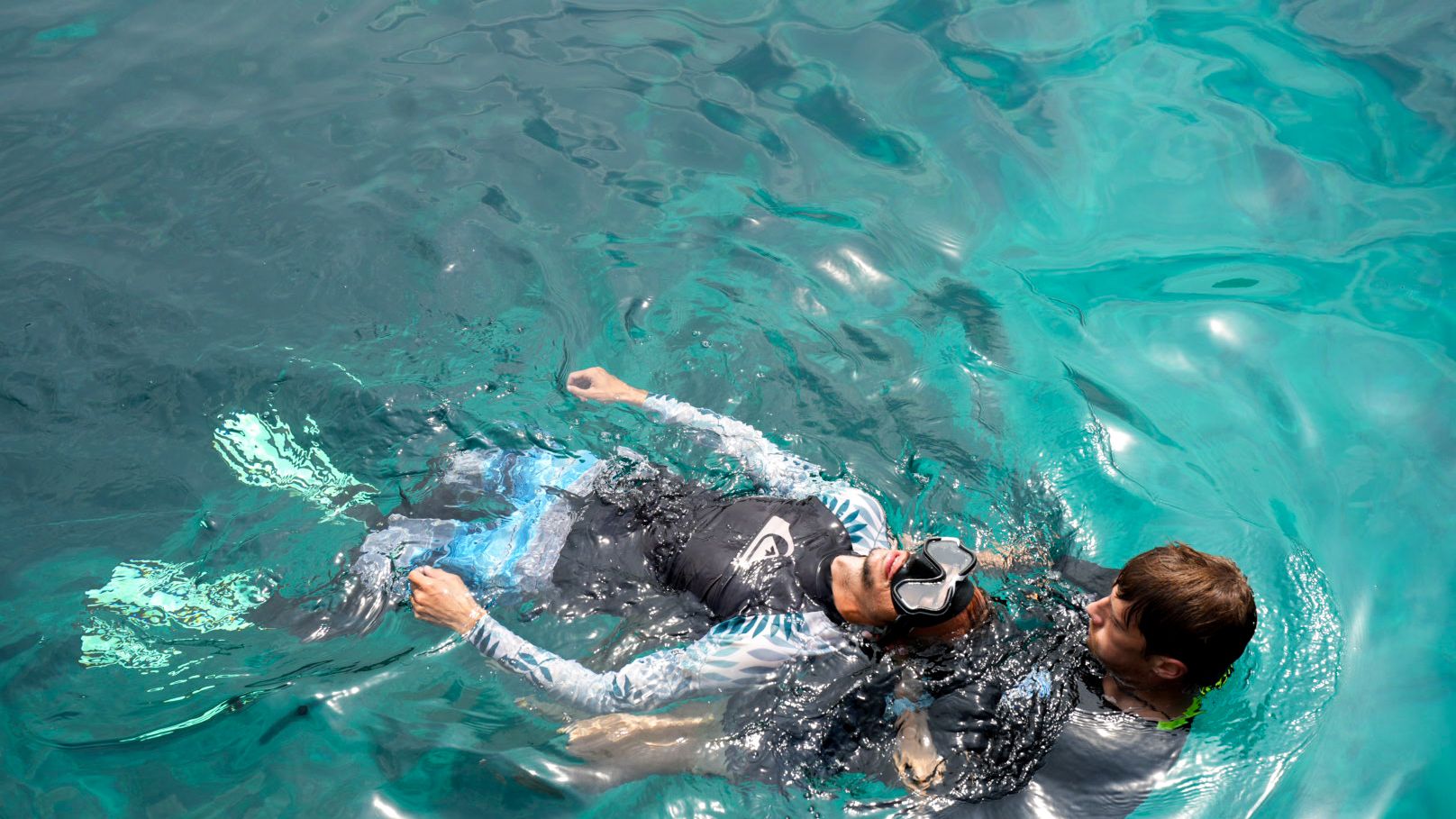
French dive school · Mae Haad & Chalok
Courses in French since 2012: SSI and CMAS / FFESSM, groups of four, first dive to instructor.
Full guide →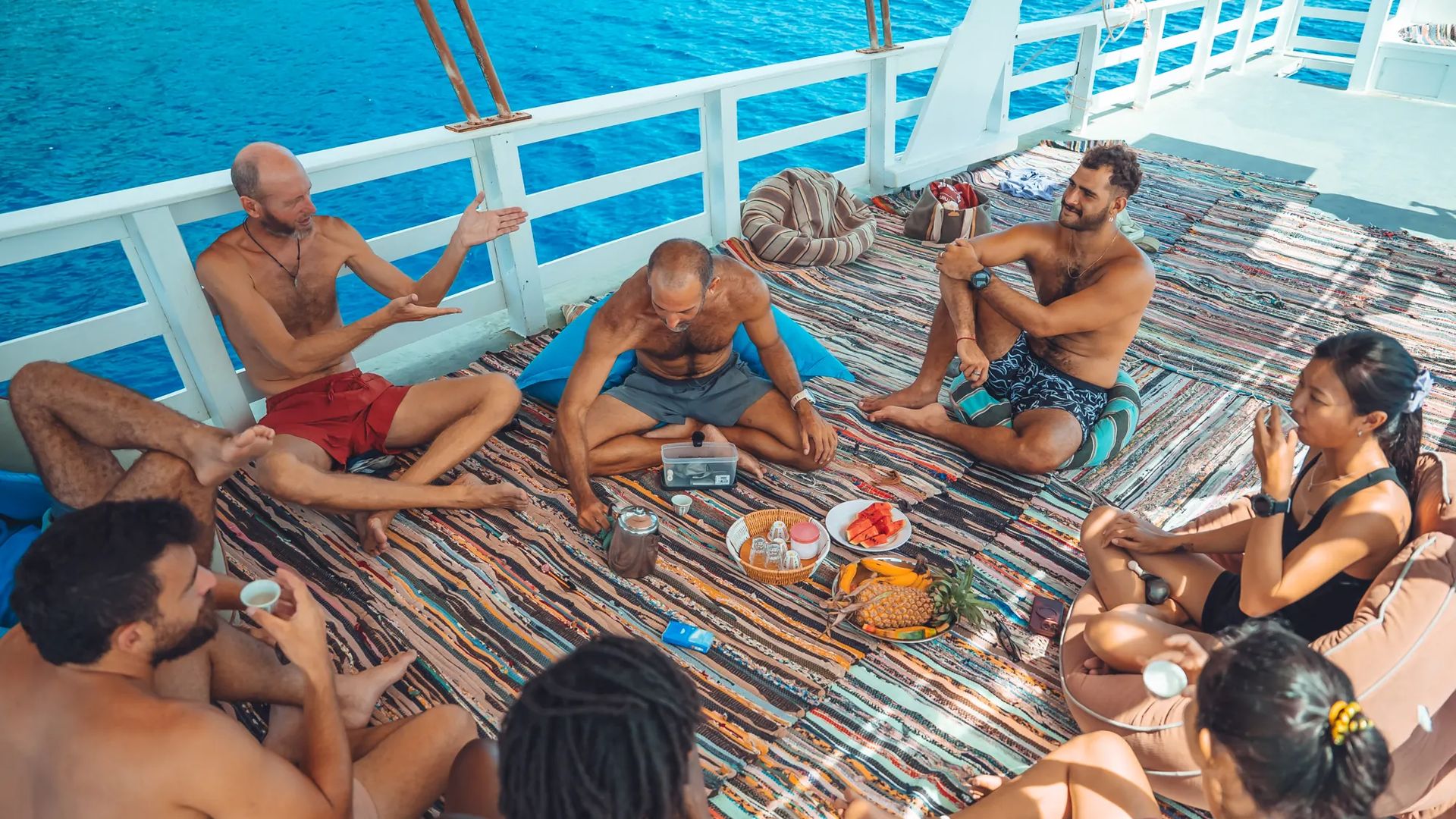
Freediving & yoga · Mae Haad
Learn to freedive on one breath, with breathwork and yoga in a sea-view shala.
Full guide →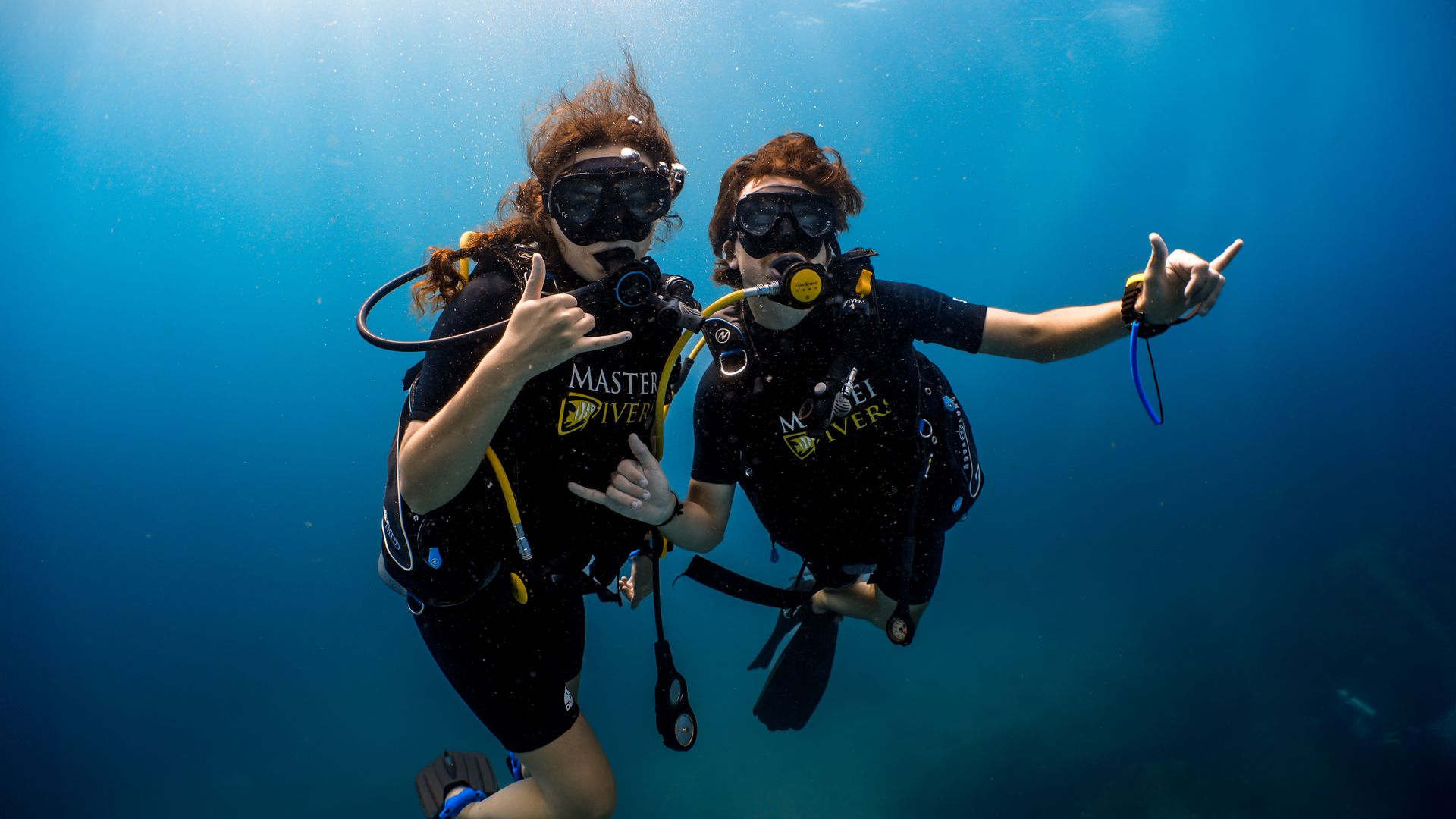
PADI 5-Star CDC · Mae Haad
One of the island's most established dive centres, with a focus on pro training.
Full guide →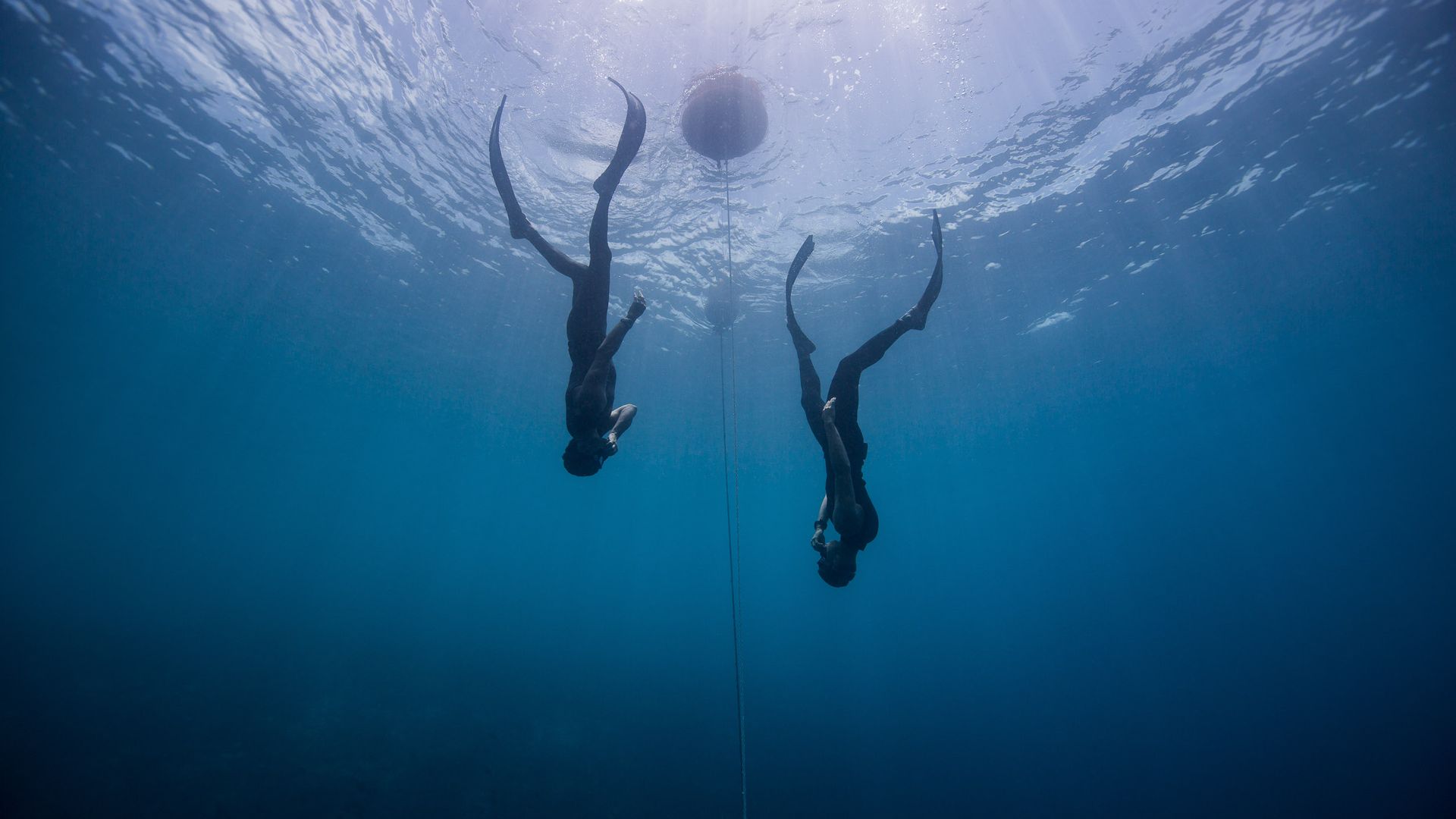
Freediving · Sairee
Personal freediving courses with experienced instructors off Sairee Beach.
Full guide →
SSI dive resort · Chalok
Dive and stay in the quiet southern bay of Chalok.
Full guide →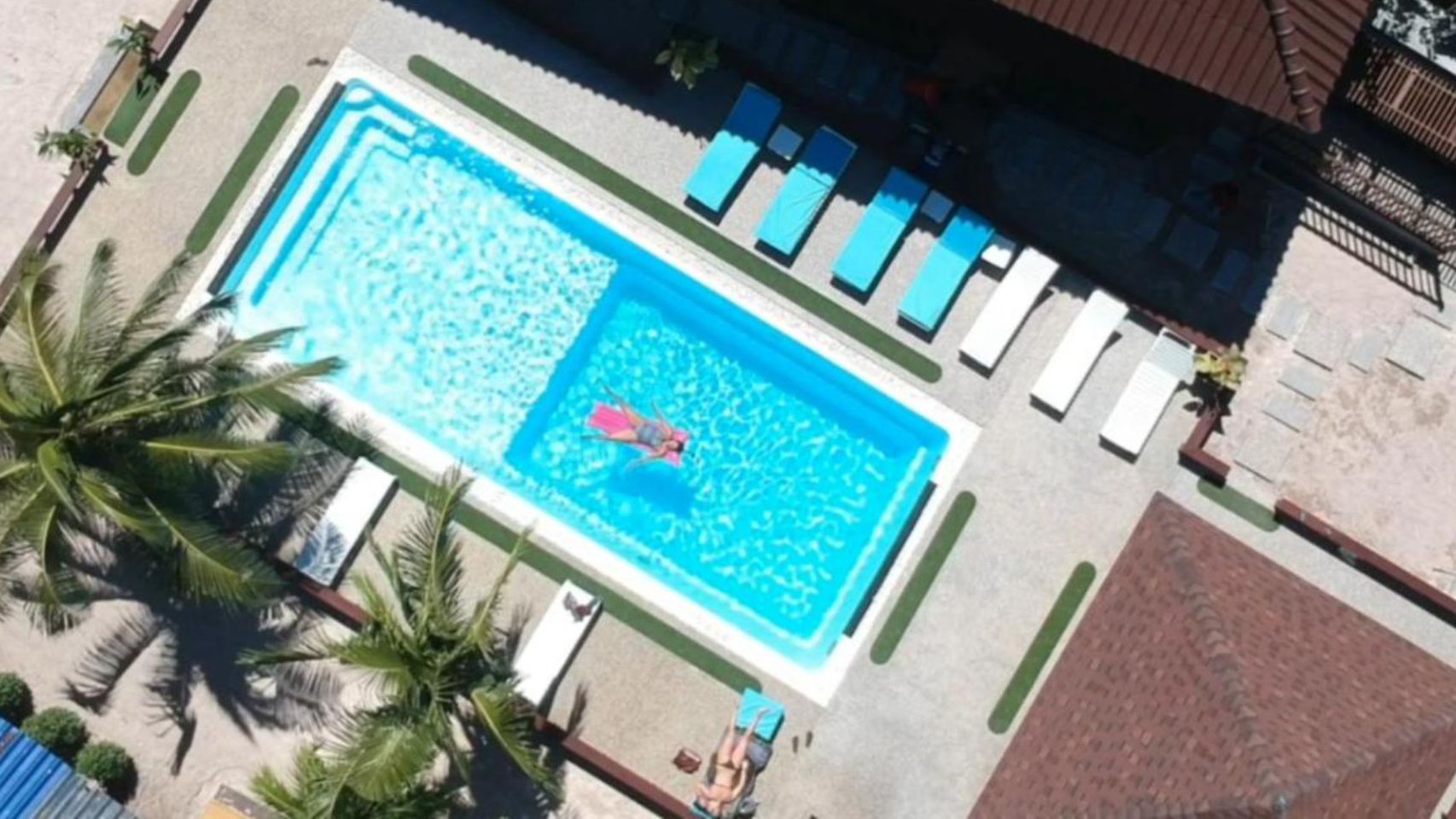
PADI dive resort · Chalok
Courses and fun dives with a resort to stay at, in Chalok.
Full guide →Also on the island: DPM Diving and dozens more. See every dive centre on Koh Tao →