Koh Tao dive sites / HTMS Hanhak Sattru
HTMS Hanhak Sattru Koh Tao's East Coast Navy Wreck Dive
A 45 m ex-navy attack craft resting upright on the sand at the mouth of Mao Bay.
Koh Tao dive sites / HTMS Hanhak Sattru
A 45 m ex-navy attack craft resting upright on the sand at the mouth of Mao Bay.
HTMS Hanhak Sattru is one of Koh Tao's two newest wreck dives, a former Royal Thai Navy attack craft sunk in September 2023 to become an artificial reef and training site. This Koh Tao wreck lies on the east coast at the mouth of Mao Bay (Ao Mao), which is why you will also hear it called the Mao Bay wreck, Aow Mao wreck or simply Hanhaksattru 312.
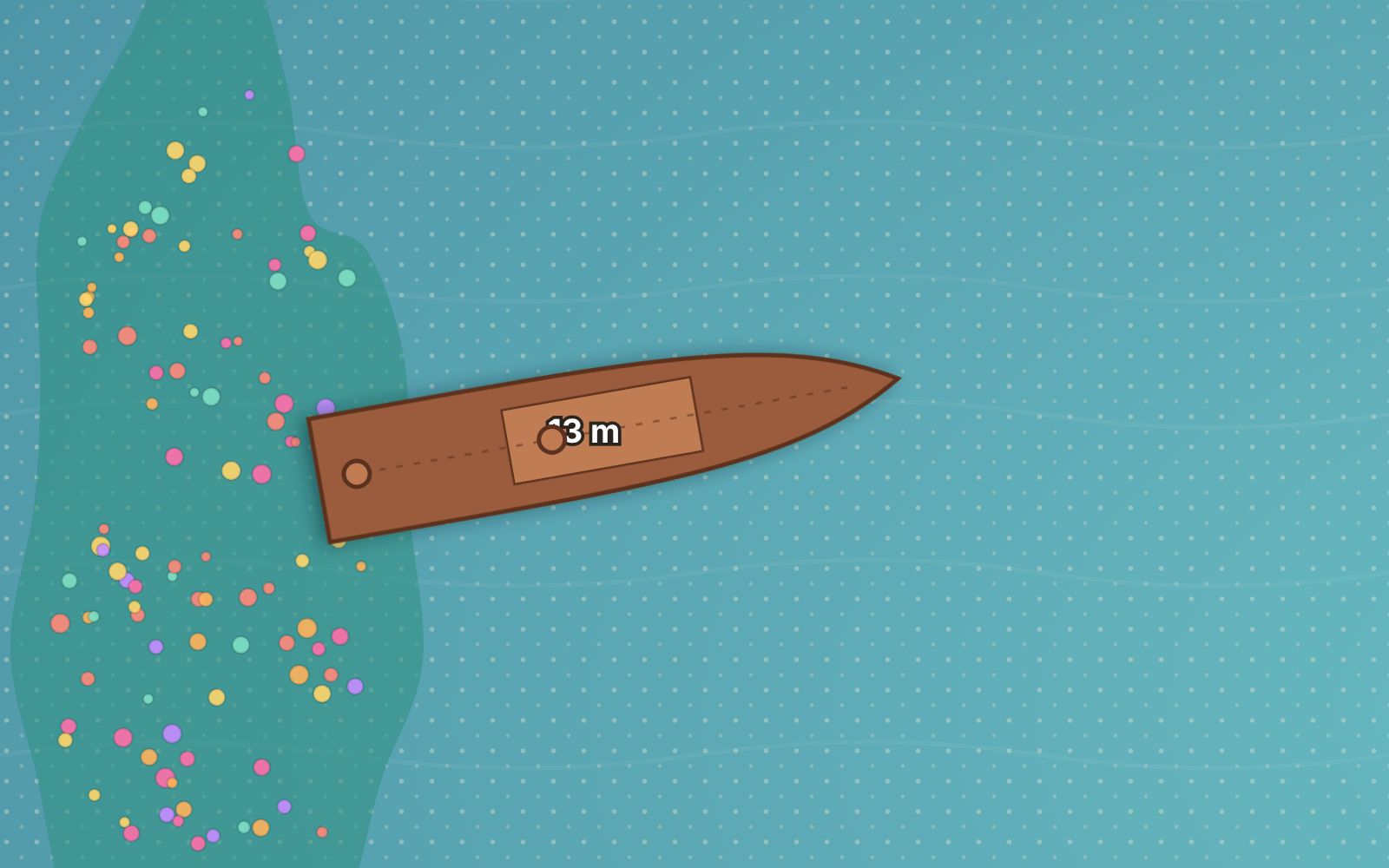
The ship sits upright on a sandy bottom, about 44.9 m long and 7 m wide, with the highest point of the wreck at roughly 13 m. It is a deeper, more serious dive than most of the east coast, so most operators keep it for Advanced Open Water divers and above. Its sister ship, HTMS Suphairin, was sunk on the west side near No Name Pinnacle.
This is an east coast site on the quiet side of the island, south of Hin Wong, and you can only reach it by boat. Most dive centres send you by taxi to Hin Wong Pier, where a shuttle boat takes over for a ride of around 20 minutes to the mooring.
Because of the transfer, it makes for a half-day or full-day outing rather than a quick hop from Mae Haad. Book ahead and ask your centre when the next trip runs, since the wreck is only dived when the east coast is calm.
You usually drop onto the wreck first. The bow comes up out of the sand as you descend, and from there you work along the hull toward the bridge and mast, which are the highest structures on the ship at around 13 m. The hull itself rests on sand at roughly 22 to 24 m, so the dive is a gradual climb from the deepest part back up to the shallows.
The bow cannon and the stern machine-gun mount are both still in place, along with the railings and ladders. After you have circled the wreck, the dive typically moves up the sloping Mao Bay reef, where boulders and coral patches take you back to the shallows for your safety stop.
The ship's exact compass heading is not confirmed, so the map on this page is a schematic rather than a survey.
For a wreck this young, the fish life is already impressive. Yellowtail, chevron and great barracuda hang above the deck, with fusiliers, snapper and sweetlips around the hull. Malabar and brown marbled groupers and giant trevally have moved in, and queenfish are sometimes seen passing through.
Under ledges and along the sand you can find lionfish, moray eels, blue-spotted stingrays and young Jenkins whiprays. Look closer and you will spot nudibranchs, shrimp and small crustaceans, plus sea whips and the first patches of coral growing on the ladders and deck gun. The wreck gets a little richer every year.
Hanhak Sattru is a former high-speed attack craft of the Royal Thai Navy's Gulf Patrol Fleet. It was built in the mid-1970s, served for about 42 years and was decommissioned in 2018. It was then handed to the Department of Marine and Coastal Resources for an underwater learning park and marine ecosystem rehabilitation project in Surat Thani Province.
Before it was sunk, fluids and harmful materials were removed, and hatchways were cut and reinforced so that trained divers can enter safely. Koh Tao's two navy wrecks went down on 7 and 8 September 2023, with Hanhak Sattru sinking on the second day.
The best months are May to September, when the south-west monsoon leaves the east coast calm. October to December brings the north-east monsoon, and the wreck is often off the schedule then.
Visibility is typically 10 to 20 m, though it can dip to around 8 m on a poor day. Current is usually light, but stronger tidal flow can pass through the bay at peak exchange, so expect your guide to plan around the tide.
In September 2023, on 8 September, one day after its sister ship HTMS Suphairin went down on the west coast.
The highest point is about 13 m and the hull rests on sand at roughly 22 to 24 m. The ship is about 44.9 m long and 7 m wide.
Hatchways have been cut and reinforced for access, but penetration requires a wreck specialty such as PADI Wreck Diver.
On the east coast at the mouth of Mao Bay (Ao Mao). Boats usually leave from Hin Wong Pier and take about 20 minutes.
It is mainly for Advanced Open Water divers and above because of the 22 to 24 m depth. Beginners can dive the shallower Mao Bay reef next to it.
A gentle, calm slope of boulders and coral beside Koh Tao's newest wreck.
3 to 25 mA quiet east coast headland with a beginner bay, light-filled caverns and a lesser-known pinnacle.
2 to 20 mA big boulder-strewn horseshoe on the wild east side, with coral bommies, crevices and blacktip reef sharks.
8 to 40 mThe east coast's big dive: a chain of granite boulders covered in soft corals, with a trench, swim-throughs and hunting fish.
Learn to dive
Koh Tao is one of the best places in the world to learn to dive: warm, calm water, sites a short boat ride away and schools for every style. Here are the courses most schools offer and the dive schools we know and trust. Schedules, course length and prices are set by each school.
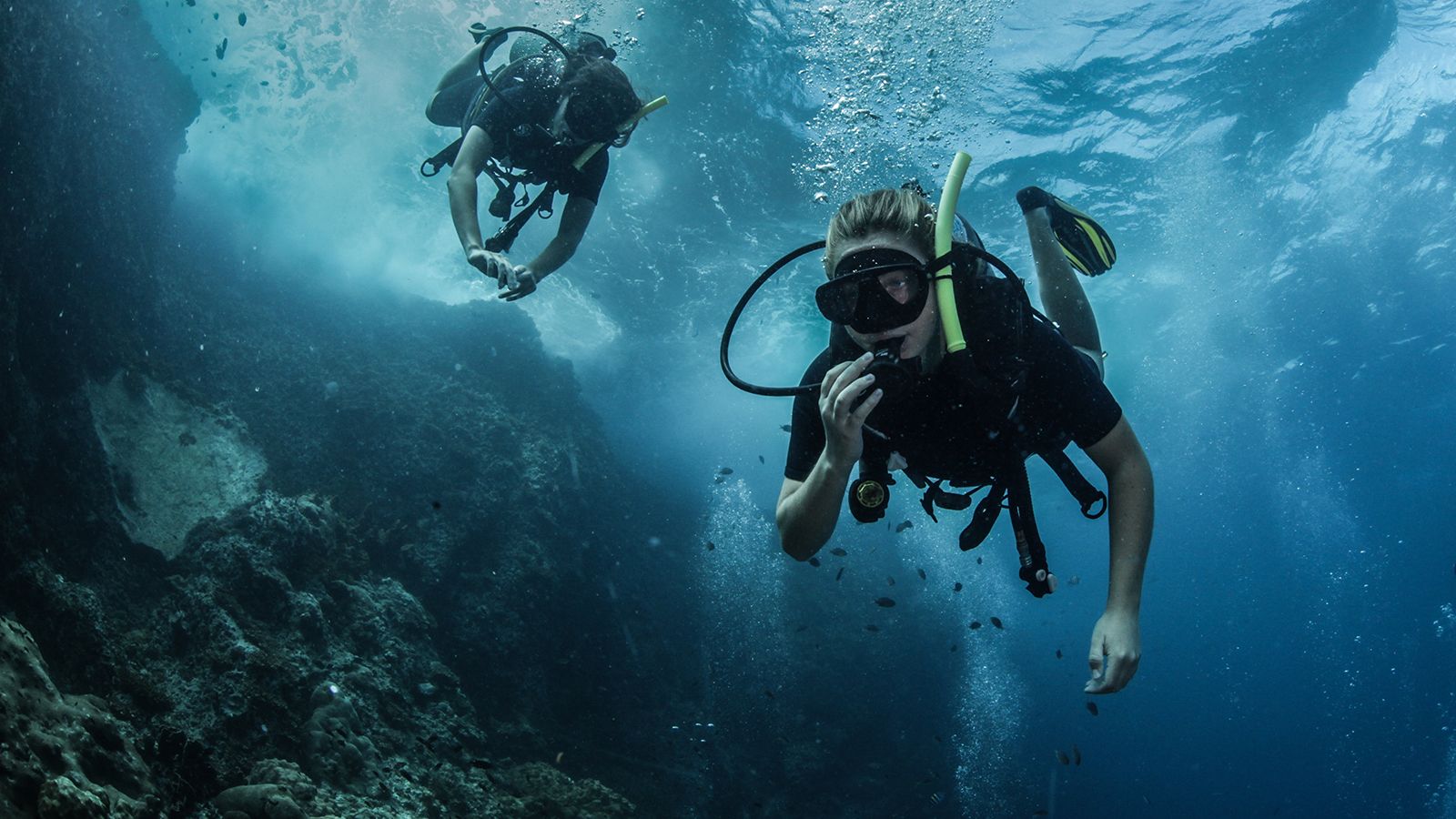
PADI 5-Star · Sairee
PADI 5-Star IDC on Sairee Beach: small groups, every level, taught in seven languages.
Full guide →
Private club · South coast
Very small classes, a training pool and boats straight from the resort pier.
Full guide →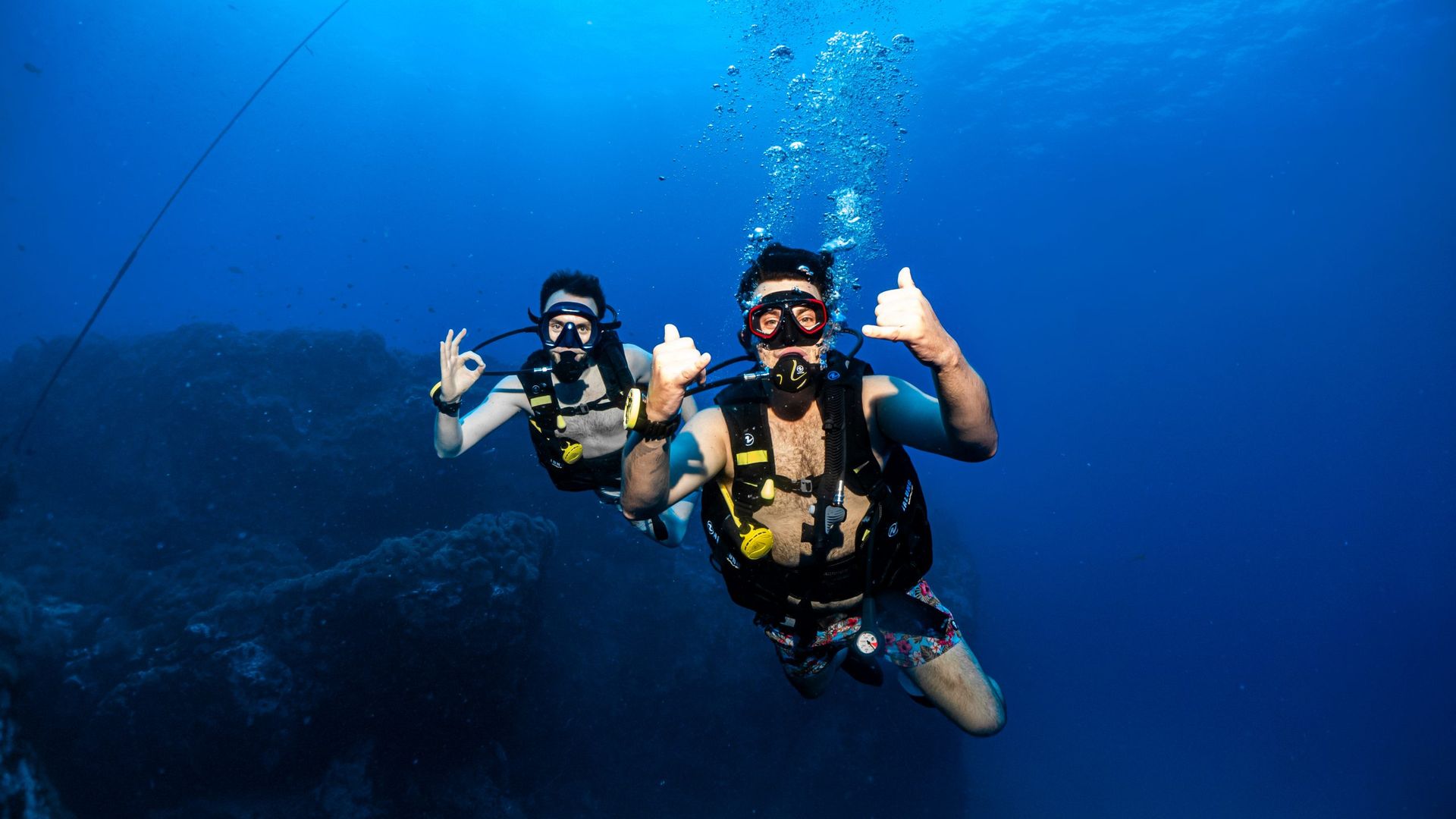
Dive school · Mae Haad
Groups of four, two minutes from the pier, from Open Water to instructor.
Full guide →
French dive school · Mae Haad & Chalok
Courses in French since 2012: SSI and CMAS / FFESSM, groups of four, first dive to instructor.
Full guide →
Freediving & yoga · Mae Haad
Learn to freedive on one breath, with breathwork and yoga in a sea-view shala.
Full guide →
PADI 5-Star CDC · Mae Haad
One of the island's most established dive centres, with a focus on pro training.
Full guide →
Freediving · Sairee
Personal freediving courses with experienced instructors off Sairee Beach.
Full guide →
SSI dive resort · Chalok
Dive and stay in the quiet southern bay of Chalok.
Full guide →
PADI dive resort · Chalok
Courses and fun dives with a resort to stay at, in Chalok.
Full guide →Also on the island: DPM Diving and dozens more. See every dive centre on Koh Tao →